
AI Lifestyle Apps are changing how people manage everyday tasks, organize their time, build habits, and stay productive. From planning a busy schedule to creating reminders, preparing shopping lists, tracking goals, or providing personalized suggestions, these apps can bring several useful functions into one convenient digital experience.
The growing range of AI apps for everyday life means you no longer need to rely on separate tools for every small task. Instead, an AI-powered lifestyle assistant can understand your instructions, adapt to your preferences, and help you handle routine activities more efficiently. The value of these apps is not simply that they use artificial intelligence. Their real benefit comes from reducing repetitive work and helping people make better use of their time.
How AI Lifestyle Apps Are Changing Everyday Routines
Modern daily life involves dozens of small decisions. What should you work on first? When should you exercise? What groceries do you need? Did you remember an important appointment? How can you fit personal goals around work and family commitments? How to maintain your everyday life?
Individually, these tasks may seem insignificant. Together, however, they can consume considerable mental energy. This is where AI lifestyle apps for daily life can become useful. Instead of simply recording information, AI-powered tools can process instructions and provide suggestions based on the information a user gives them.
For example, a conventional to-do list might allow you to enter tasks such as completing a report, going grocery shopping, exercising, and calling a friend. An AI-powered app may help organize those tasks according to deadlines, estimated effort, or available time. Some tools can also turn natural-language instructions into reminders, schedules, lists, or suggested plans.
This makes AI apps for daily routine particularly useful for people who have changing schedules. Rather than manually reorganizing every task, users can communicate what has changed and allow the application to help restructure their plans.
AI can also make routine technology feel more conversational. Instead of navigating multiple menus, users can sometimes describe what they need in ordinary language. An AI lifestyle assistant may then provide an answer, create a plan, summarize information, or suggest a next step.
Another important advantage is personalization. When an application has access to appropriate user-provided information, it can potentially make recommendations that are more relevant than generic suggestions. For instance, someone trying to establish a consistent exercise routine may receive suggestions that fit their existing schedule rather than a completely generic workout timetable.
However, AI should be treated as a support tool rather than an unquestionable authority. Recommendations can be incorrect, incomplete, or unsuitable for individual circumstances. Users should review important suggestions and avoid giving an application unnecessary sensitive information.
Practical Uses of AI Apps for Everyday Life
The usefulness of AI lifestyle apps becomes easier to understand when you look at ordinary situations. These applications are not limited to workplace productivity or complex technical tasks. Many are designed around the small activities that make up everyday life.
Planning Your Day
AI personal assistant apps can help organize appointments, tasks, reminders, and priorities. Instead of creating a schedule manually, you can describe what needs to be completed and when it needs to happen.
For example, you might have three urgent work tasks, a doctor’s appointment, an exercise goal, and household responsibilities. An AI assistant could help arrange these commitments into a practical sequence, although the user should always confirm that the proposed schedule makes sense.
Managing Personal Productivity
AI apps for personal productivity can help users break large projects into smaller actions. A vague goal such as “prepare for my presentation” can become a sequence of tasks such as researching the topic, creating an outline, preparing slides, reviewing information, and practicing.
This approach can make large projects feel more manageable because the user has a clearer idea of what to do next.
Creating Better Habits
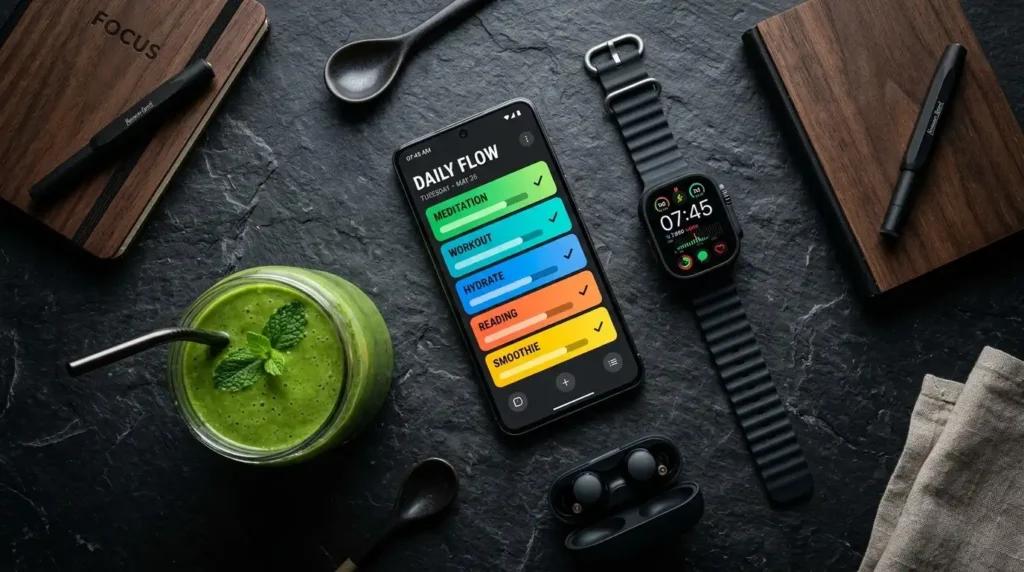
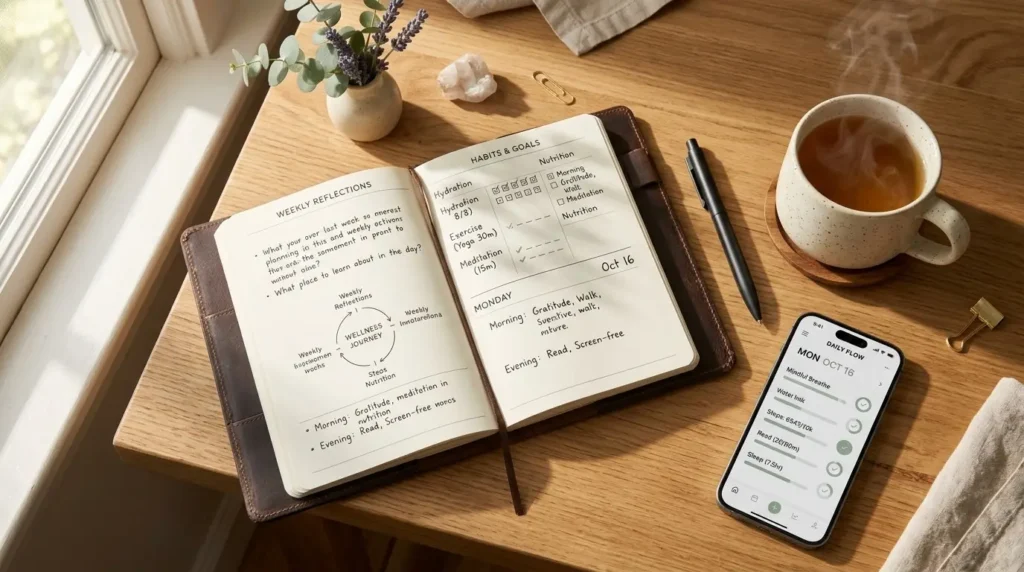
AI apps for better daily habits can support goals such as reading regularly, drinking enough water, exercising, reducing screen time, or maintaining a consistent bedtime.
Rather than simply recording whether a habit was completed, some applications can help users identify patterns and create realistic routines. The key is consistency. An AI tool cannot create a habit by itself, but it can make the process easier to organize and monitor.
Organizing Shopping and Household Tasks
AI-powered lifestyle tools can also help with ordinary household planning. Users can create grocery lists, organize errands, plan meals, or turn a collection of household responsibilities into a manageable checklist.
This is particularly useful when several errands need to be completed together. Grouping related tasks can reduce unnecessary trips and make a busy day easier to manage.
Getting Quick Information
An AI lifestyle assistant can also act as a conversational information tool. Users may ask questions, request summaries, brainstorm ideas, or seek explanations without searching through multiple sources manually.
For important decisions, however, AI-generated information should be checked against reliable sources. Convenience should not replace verification when accuracy matters.
AI Apps for Personal Productivity and Better Time Management
One of the strongest applications of AI in everyday life is personal productivity. Unlike older productivity software that mainly stores information, AI can potentially help interpret it.
Consider a simple weekly plan. You may have several work deadlines, personal appointments, exercise sessions, household responsibilities, and personal goals. A traditional calendar can display these commitments, but it may not explain how to manage them together.
AI apps for personal productivity can help bridge this gap by turning information into suggestions. Depending on the application, an AI system may help prioritize tasks, summarize notes, create schedules, identify unfinished work, or break projects into smaller steps.
This can be particularly valuable for people who struggle with deciding where to start. When everything appears equally important, an AI tool can help organize tasks according to deadlines and priorities. The final decision should still remain with the user because an application may not understand every personal circumstance.
Another useful application is meeting and information management. AI tools can summarize notes, identify action items, and turn conversations into organized follow-up tasks. This can reduce the amount of manual administrative work involved in keeping track of commitments.
AI can also help with planning personal goals. Suppose someone wants to read 12 books in a year. Instead of treating this as one large objective, an AI app could help turn it into smaller weekly or monthly targets. Similar approaches can be used for learning a language, preparing for an exam, developing a fitness routine, or completing a personal project.
The most effective approach is not necessarily to automate every decision. Instead, AI works best when it handles repetitive organization while the user remains responsible for priorities and final choices.
Choosing the Right AI Lifestyle Assistant
Not every AI application is designed for the same purpose. Some focus primarily on conversations, while others concentrate on scheduling, habits, fitness, finances, organization, or productivity. Choosing the right tool therefore depends on what you actually want it to accomplish.
Start With Your Biggest Daily Problem
Before downloading an AI app, identify the problem you want to solve. If you constantly forget appointments, a planning-focused tool may be more useful than a general chatbot. If you struggle with task management, an AI productivity application may be a better fit.
Look for Useful Personalization
A good AI lifestyle assistant should make recommendations that are relevant without requiring excessive manual input. Check what information the application uses and whether you can control its personalization features.
Check Privacy and Data Controls
Lifestyle applications may deal with highly personal information, including schedules, locations, habits, preferences, or notes. Read the privacy policy and understand what information is collected, how it is used, and whether data can be deleted.
Avoid Unnecessary Complexity
An application does not become more useful simply because it has more AI features. If an app takes longer to configure and maintain than the task itself, it may not improve your routine.
Test Whether It Fits Your Routine
The best tool is one you will actually use. Try an application with a few practical tasks before moving your entire routine into it. If it consistently saves time and reduces organizational effort, it may be worth keeping.
How AI-Powered Lifestyle Tools Can Support Different Areas of Life
AI lifestyle apps can be useful across several areas because everyday life involves more than work and scheduling. The same technology can support learning, organization, communication, personal development, and household management.
For students, AI tools can help organize study schedules, summarize complex material, generate practice questions, or create revision plans. They should supplement learning rather than replace the process of understanding the material.
For professionals, AI can help organize tasks, summarize information, prepare meeting notes, and structure projects. This can reduce repetitive administrative work and leave more time for activities that require human judgment.
For families, AI-powered tools can help coordinate shared calendars, shopping lists, household responsibilities, and reminders. A centralized system can make it easier for everyone to understand what needs to happen.
For people focused on personal development, AI apps for better daily habits can help establish routines around reading, exercise, learning, or other goals. Progress tracking can make long-term goals easier to monitor.
Travel is another area where AI apps can be helpful. An AI assistant can help organize potential activities, create itinerary ideas, summarize travel information, and adjust plans when circumstances change. Users should still verify important information such as opening times, transport schedules, prices, and booking conditions.
The broader benefit is flexibility. Instead of treating AI as a technology reserved for complicated tasks, people can use AI-powered lifestyle tools for the small organizational challenges they encounter every day.
Benefits and Limitations of AI Lifestyle Apps
The main benefit of AI lifestyle apps is convenience. They can reduce repetitive work and help users organize information faster. Instead of manually turning every idea into a task or schedule, users can sometimes explain what they need and allow the application to structure it.
Personalization is another advantage. AI can potentially recognize patterns and adapt suggestions based on information provided by the user. This can make routines more relevant than generic productivity systems.
These apps can also support consistency. Reminders, progress tracking, planning suggestions, and personalized prompts can make it easier to stay focused on long-term goals.
However, there are limitations. AI systems can misunderstand instructions or generate inaccurate information. A recommendation that appears sensible may not account for an important personal constraint.
Privacy is another consideration. The more information an app receives, the more important it becomes to understand how that information is handled.
There is also a risk of over-automation. If users allow AI to make every small decision, they may become less engaged with their own priorities. The most practical approach is to use AI for organization and assistance while retaining human control over important decisions.
Ultimately, AI should make everyday life simpler rather than create another complicated system that requires constant management.
FAQ’s:
What are AI Lifestyle Apps?
AI Lifestyle Apps are applications that use artificial intelligence to help with everyday activities such as planning, organization, productivity, reminders, information management, and habit building. Unlike traditional apps that often require users to manually enter and organize everything, AI-enabled applications may understand natural-language instructions and provide suggestions or automate certain tasks. They can range from general AI personal assistant apps to specialized tools for productivity, fitness, routines, learning, and household management. Their usefulness depends on the features offered and how well they fit an individual’s needs.
How can AI apps help with daily life?
AI apps can support daily life by helping users organize schedules, prioritize tasks, create reminders, manage lists, plan activities, summarize information, and develop routines. AI apps for daily routine can be particularly helpful when a person’s schedule changes frequently because they can potentially reorganize tasks based on new instructions. Some tools also support personal goals and habits by providing reminders or tracking progress. However, users should review important recommendations because AI can make mistakes and may not understand every personal circumstance.
Are AI lifestyle apps useful for productivity?
Yes, AI lifestyle apps can be useful for productivity when they reduce repetitive organizational work. AI apps for personal productivity may help break large projects into smaller tasks, organize priorities, summarize notes, create schedules, or identify follow-up actions. Their value depends on whether they genuinely save time. An overly complicated application may add more work instead of reducing it. Users should also remain responsible for deciding which tasks matter most because an AI system may not understand personal priorities, deadlines, or circumstances as well as the person using it.
Can AI apps help build better daily habits?
AI apps for better daily habits can help users create routines by providing reminders, tracking progress, suggesting manageable goals, and identifying patterns. For example, someone trying to read more regularly could use an app to establish a daily reading target and monitor consistency. AI can provide structure and encouragement, but it cannot guarantee that a habit will develop. Successful habit building still depends on realistic goals, repetition, and personal commitment. Users should also avoid relying on AI-generated health or wellness recommendations without appropriate professional guidance when the subject involves significant health risks.
Conclusion:
AI Lifestyle Apps are becoming useful tools for managing the practical demands of modern everyday life. From AI personal assistant apps and productivity tools to habit trackers, planning systems, and conversational assistants, these technologies can reduce repetitive work and make routines easier to organize.
The most valuable AI apps for everyday life are not necessarily those with the most features but those that solve a genuine problem without creating unnecessary complexity. Whether you want to manage your schedule, improve personal productivity, organize household tasks, or develop better routines, an AI lifestyle assistant can provide useful support. The key is to use AI as an assistant rather than a replacement for human judgment, personal responsibility, and decision-making.