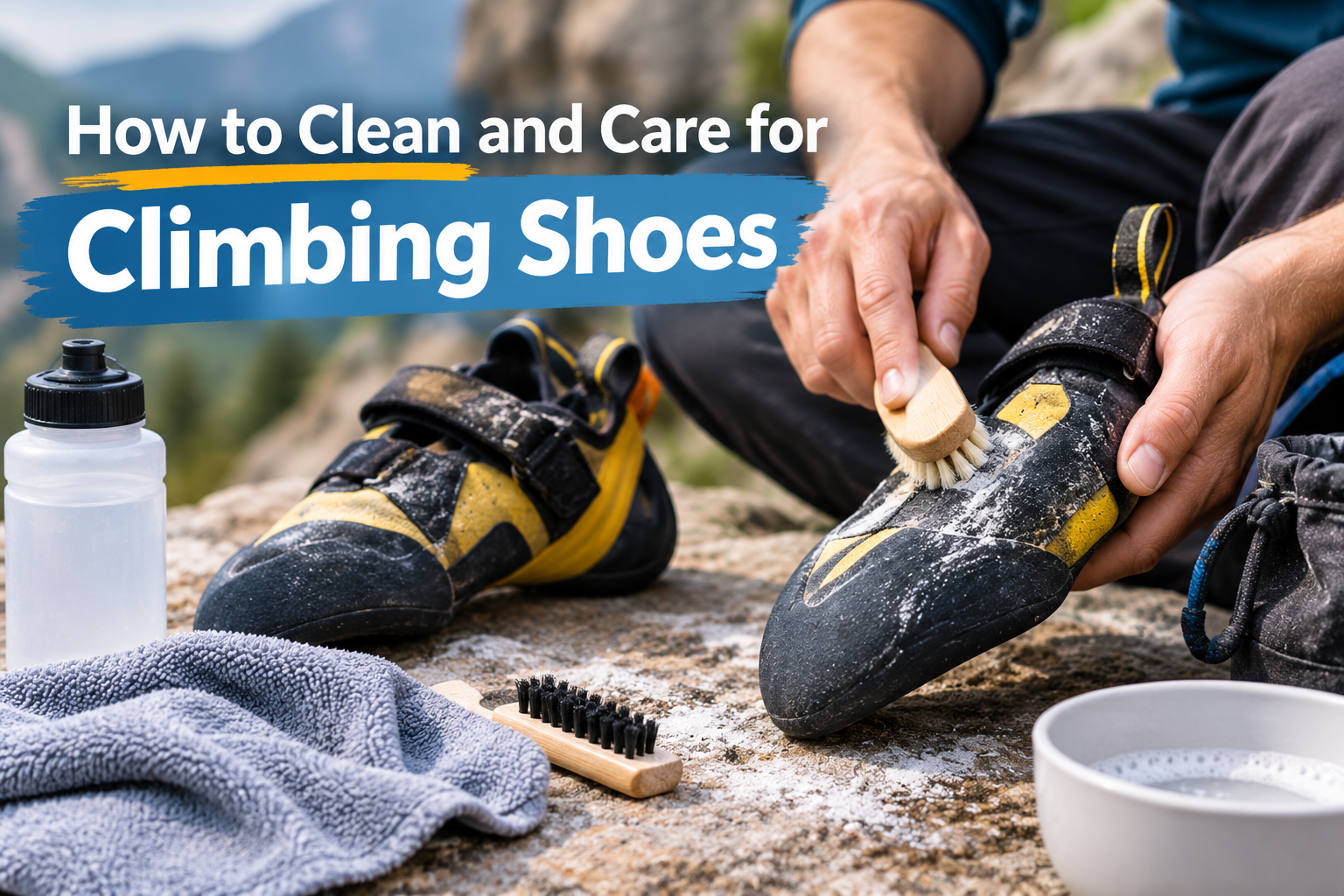
Climbing shoes take a lot of abuse. They pick up chalk, dirt, sweat, and grime during every session, while the rubber sole constantly rubs against climbing holds and rock. Without proper care, they can start to smell, lose grip, deform, or wear out sooner than necessary.
The safest way to clean climbing shoes is to clean them by hand with a soft cloth or brush, use only as much water as necessary, and let them dry naturally away from direct heat and sunlight. Since climbing shoes use different materials and adhesives, always check the manufacturer’s care instructions before doing a deeper clean.
With a simple routine, you can keep your shoes cleaner, reduce odor, protect the rubber, and extend their useful life.
How to Clean Climbing Shoes
For most climbing shoes, you do not need a complicated cleaning process. Regular light cleaning is better than waiting until the shoes are heavily soiled and then soaking them.
1. Remove loose dirt and chalk
Start by removing any loose dirt, dust, chalk, or dried mud from the outside of the shoes. A soft brush works well for stubborn particles, while a dry or slightly damp microfiber cloth can handle lighter dirt.
Pay particular attention to the sole. Small particles stuck to the rubber can interfere with the contact between the shoe and the climbing surface.
2. Clean the upper
For routine cleaning, wipe the upper with a damp cloth. If the manufacturer’s instructions allow soap, use a small amount of mild soap with water.
Work gently rather than aggressively scrubbing the material. Leather and synthetic uppers can react differently to moisture and cleaning products, so avoid assuming that a method that works for one pair is suitable for another.
If your shoes are only dusty or lightly dirty, a damp cloth is usually enough.
3. Clean the inside
The inside of a climbing shoe collects sweat, skin oils, and moisture, particularly when you climb without socks.
Use a damp cloth to wipe the lining and insole area. If you need a deeper clean, follow the manufacturer’s instructions for your particular shoes rather than soaking them automatically.
The goal is to remove buildup without leaving the shoe saturated with water.
4. Clean the rubber sole
Use a damp cloth to wipe dirt and chalk from the sole. For stubborn dirt, a soft brush or an old toothbrush can help around the edges and textured areas.
Clean rubber is important because climbing shoe performance depends heavily on the rubber maintaining good contact with the climbing surface.
Do not aggressively sand or scrub the rubber every time you clean your shoes. Excessive abrasion removes rubber and can shorten the life of the sole.
5. Remove excess moisture
After cleaning, use a dry microfiber cloth or towel to absorb as much moisture as possible.
Do not immediately put wet climbing shoes into your climbing bag. Trapped moisture creates an ideal environment for unpleasant odors and can contribute to material deterioration over time.
6. Let them dry completely
Place the shoes somewhere dry and well ventilated. Allow them to dry naturally before storing them.
Avoid direct sunlight, radiators, heaters, hair dryers on high heat, and other strong heat sources. Excessive heat can affect rubber, adhesives, leather, and the shape of the shoe.
Can You Wash Climbing Shoes?
Yes, climbing shoes can be cleaned, but the correct method depends on their construction and the manufacturer’s instructions.
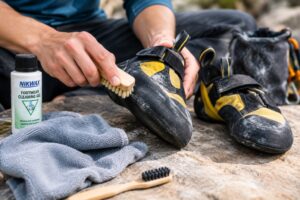
There is an important difference between cleaning climbing shoes and soaking them in water. A controlled hand-cleaning process is much safer than treating them like ordinary washable footwear.
If the shoes are only dusty or lightly dirty, start with a damp cloth. A deeper hand clean may be appropriate when sweat, salt, mud, or other buildup has accumulated.
Can You Put Climbing Shoes in the Washing Machine?
You should generally avoid putting climbing shoes in a washing machine.
The combination of water, agitation, temperature, and mechanical movement can cause problems such as shrinking, deformation, damaged adhesives, or separation of rubber components. Even if the shoes come out looking clean, they may no longer fit or perform the same way.
Climbing shoes are performance footwear, so a gentle hand-cleaning approach is the safer choice.
Can You Hand-Wash Climbing Shoes?
Hand cleaning gives you much more control over how much water and pressure the shoes receive.
If your manufacturer permits washing, use water and a mild soap where appropriate. Clean the shoe gently, rinse according to the manufacturer’s instructions, remove excess moisture with a towel, and let the shoes air-dry completely.
Do not assume that every climbing shoe should be fully submerged. Some models and materials are more sensitive to water than others.
You May Like to read: Daily Habits for a healthier life.
How to Dry Climbing Shoes
Drying is just as important as cleaning. A poorly dried climbing shoe can develop a strong odor, while excessive heat can damage the materials that hold the shoe together.
After cleaning:
- Wipe away excess water with a clean towel.
- Open the shoe as much as its design allows to improve airflow.
- Place it in a cool, dry, ventilated area.
- Allow it to dry naturally.
- Do not store it until the inside is completely dry.
You can place clean, absorbent material inside the shoes to help remove moisture, but replace it if it becomes damp.
Can You Dry Climbing Shoes With a Hair Dryer?
It is better to avoid high heat.
A hair dryer can expose climbing shoes to concentrated heat, which may affect rubber, glue, leather, or the shoe’s shape. If you need to speed up drying, better airflow is preferable to significantly higher temperature.
A fan or well-ventilated room can help move air around the shoes without subjecting them to intense heat.
Can You Put Climbing Shoes in the Sun?
Avoid leaving climbing shoes in strong, direct sunlight to dry.
The combination of heat and UV exposure can contribute to deterioration of materials. Natural air drying in a shaded, ventilated location is a safer option.
How to Get Rid of Smelly Climbing Shoes
Climbing shoes become smelly mainly because sweat, moisture, bacteria, and skin debris accumulate inside an enclosed shoe. The easiest way to control the smell is to reduce moisture and buildup before the odor becomes severe.
Take Your Shoes Off Between Climbs
Do not keep climbing shoes on while sitting around between attempts. Taking them off gives both your feet and the shoes a chance to cool and dry. This is particularly useful during long gym sessions or hot outdoor climbing days.
Remove Them From Your Climbing Bag
One of the easiest mistakes to avoid is leaving sweaty shoes inside a closed backpack for hours after climbing. Take them out when you get home and allow them to air out. A few minutes of cleaning and ventilation can make a noticeable difference over time.
Keep Your Feet Clean
Clean, dry feet put less sweat and debris into the shoe.
If your feet are particularly sweaty, allowing them to dry before putting your climbing shoes back on can also help reduce moisture buildup.
Use Odor-Control Products Carefully
Deodorizing inserts, shoe powders, or other odor-control products can be useful when normal ventilation is not enough. Use products that are appropriate for footwear and follow their instructions.
They should support good shoe hygiene rather than replace cleaning and drying.
How to Care for Climbing Shoe Rubber
The rubber is one of the most important parts of a climbing shoe. It is responsible for the friction that lets you stand on small edges, smear against surfaces, and maintain contact with climbing holds.
Keeping the rubber clean is therefore part of performance maintenance.
Keep Dirt Off the Sole
Avoid walking around in climbing shoes when you are not climbing. Dirt, grit, and rough surfaces can wear down the rubber unnecessarily. At an outdoor crag, a small mat, tarp, or clean piece of carpet gives you somewhere to stand while preparing for a climb.
Do Not Put Chalk Under Your Shoes
Putting climbing chalk or magnesite on the sole does not improve grip. The climbing shoe’s rubber needs direct contact with the climbing surface. A layer of powder between the rubber and the surface can interfere with that contact rather than improve it.
If chalk has accumulated on the sole, wipe it away before climbing.
Avoid Aggressive Rubber Cleaning
A dirty sole can be cleaned with a damp cloth or suitable soft brush. Stubborn contamination may require more careful treatment, but aggressive brushing or repeated abrasion removes rubber.
Clean the sole to remove contamination, not to reshape or repeatedly abrade the rubber.
Keep Shoes Away From High Heat
Never leave climbing shoes sitting in a hot car for extended periods.
High temperatures can soften or deform rubber and can also affect adhesives and the rubber rand around the shoe. A hot vehicle can become much hotter than the surrounding outdoor temperature, making it particularly risky for climbing footwear.
How to Store Climbing Shoes
Good storage is simple: keep climbing shoes dry, cool, clean, and ventilated. After a climbing session, remove them from your backpack rather than leaving them compressed in a dark, damp compartment.
Store them somewhere away from excessive heat and moisture. Avoid placing them next to heaters or in areas where temperature and humidity fluctuate significantly. If the shoes are still damp, let them dry before putting them into a closed container or bag.A breathable shoe bag can also help protect them from dirt and sunlight while allowing some airflow.
How to Make Climbing Shoes Last Longer
Cleaning is only one part of climbing shoe care. How you use the shoes has an even bigger effect on their lifespan.
Wear Them Only for Climbing
Climbing shoes are designed for climbing, not for walking around the gym, parking lot, trail, or crag. Walking on rough ground puts unnecessary wear on the rubber and can deform parts of the shoe.
Improve Your Footwork
Dragging your toes across the wall or repeatedly scraping the rubber against rough surfaces can accelerate wear. More precise foot placement reduces unnecessary friction and helps preserve the rubber.
Take Care of the Rand
The rand is the rubber that wraps around the upper portion of the shoe. It receives considerable wear around the toe and sides.
Inspect it regularly for excessive thinning, separation, or damage. Catching problems early can make repair or resoling more practical.
Do Not Leave Shoes in Extreme Temperatures
Heat is one of the easiest ways to damage climbing footwear without realizing it. Keep shoes away from hot cars, radiators, direct heaters, and other high-temperature environments.
When Should You Resole Climbing Shoes?
Climbing shoes often need resoling before the entire shoe is worn out.
Look at the sole and toe regularly. If the rubber is becoming very thin, developing a hole, or showing significant wear near the toe or rand, it may be time to have the shoes assessed by a professional resoler.
Resoling can be worthwhile when the upper, rand, and overall structure of the shoe are still in good condition.
Waiting until the rubber is completely destroyed can allow damage to spread into parts of the shoe that are more difficult or expensive to repair.
If you are unsure, compare the cost of resoling with the condition and replacement cost of the shoe. A well-fitting pair that has already adapted to your feet can be worth repairing.
Climbing Shoe Care Mistakes to Avoid
A few common habits can shorten the life of climbing shoes quickly.
Don’t put them in the washing machine. Mechanical agitation and excessive water can damage the construction.
Don’t dry them with strong heat. Heat can affect rubber, adhesives, leather, and shape.
Don’t leave them in a hot car. High temperatures can deform rubber and damage glued components.
Don’t leave them inside your backpack after climbing. Trapped sweat and moisture encourage odor.
Don’t walk around in climbing shoes. Dirt and rough surfaces wear down climbing rubber.
Don’t aggressively scrub the sole. Removing dirt is useful; removing rubber is not.
Don’t put chalk under the sole. Chalk can interfere with direct rubber contact.
Don’t ignore the manufacturer’s instructions. Different shoes use different materials and construction methods.
A Simple Climbing Shoe Care Routine
You do not need to spend a lot of time maintaining your shoes. A few habits after every session can prevent most problems. For more ideas on organizing useful habits and activities, see our guide to Top Lifestyle App Stack: Design Your Ultimate Routine.
After Every Session
- Take the shoes off.
- Remove them from your climbing bag.
- Wipe away visible dirt and chalk.
- Let them air out.
- Check the sole and toe for unusual wear.
When They Become Dirty
- Clean the upper gently.
- Wipe or brush the sole.
- Clean the inside if necessary.
- Remove excess moisture.
- Allow the shoes to dry completely.
When Odor Becomes Noticeable
- Improve ventilation.
- Clean the inside according to the manufacturer’s instructions.
- Make sure your feet are clean and dry.
- Use an appropriate odor-control product if needed.
When the Rubber Starts Wearing Thin
Inspect the sole and rand and consider professional resoling before significant structural damage occurs.
Frequently Asked Questions
How often should I clean my climbing shoes?
Clean them whenever dirt, chalk, sweat, or odor builds up, but don’t wait until they are heavily contaminated. Light wiping and regular ventilation after each session can reduce the need for deeper cleaning.
Can I wash climbing shoes with soap?
Some climbing shoes can be hand-cleaned with mild soap, while others have more specific care requirements. Check the manufacturer’s instructions first and avoid excessive soaking.
How do I clean climbing shoe rubber?
Use a damp cloth or soft brush to remove dirt and chalk. Clean gently because aggressive scrubbing or abrasion can remove rubber and shorten the sole’s lifespan.
How do I stop climbing shoes from smelling?
Take them off between climbs, remove them from your bag after each session, keep your feet clean and dry, and allow the shoes to air out completely. Odor-control products can help when needed.
Can I dry climbing shoes with a hair dryer?
Avoid high heat. Strong, concentrated heat can affect rubber, adhesives, leather, and the shape of the shoe. Natural air drying or gentle airflow is safer.
Can I put climbing shoes in the sun?
It is better to dry them in a shaded, ventilated area. Strong sunlight and heat can contribute to material deterioration and may affect rubber and adhesives.
How do I know when my climbing shoes need resoling?
Look for a very thin sole, excessive toe wear, holes, or damage around the rand. If the rest of the shoe remains structurally sound, resoling may be a better option than replacing the entire pair.
Summary
Good climbing shoe care does not require complicated products or frequent deep cleaning. The most important habits are simple: keep the rubber clean, remove shoes between climbs, air them out after every session, avoid unnecessary moisture and heat, and inspect the sole and rand regularly.
When cleaning is necessary, use a gentle hand-cleaning method appropriate for the shoe’s materials and manufacturer’s instructions. Never rely on a washing machine or high heat to do the job.
Treat your climbing shoes as performance equipment rather than ordinary footwear, and they will generally give you better grip, comfort, and service for longer.