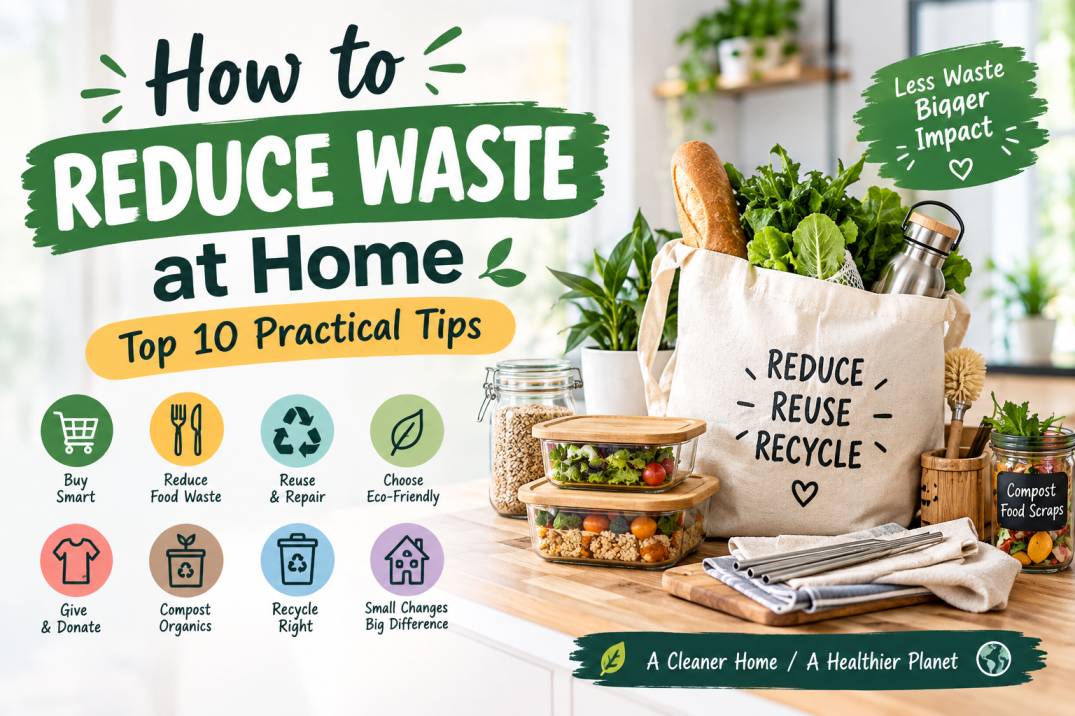
If your trash bin fills up faster than you expect, the answer is not simply to recycle more. The bigger opportunity is to stop unnecessary waste before it reaches the bin. Buying only what you need, reusing everyday items, repairing things, and planning food can make a noticeable difference.
You do not need to change everything at once. Start with the waste your household creates most often, then replace that habit with a practical alternative. These 10 simple ways to reduce waste at home will help you cut unnecessary trash without making everyday life difficult.
10 Tips to Reduce Waste at Home
Here is a quick look at the 10 habits that can make the biggest difference:
- Check your trash first: Find out what you throw away most often before changing your habits.
- Use up food before buying more: Keep older food visible and plan meals around it.
- Buy the amount you need: A cheap bulk deal is not a saving if you throw half of it away.
- Replace your most-used disposables: Start with one item you throw away every day.
- Repair before replacing: Give broken clothes, furniture and household items another chance.
- Keep unwanted items moving: Donate, sell or give away useful things before they become clutter.
- Choose less packaging: Avoid unnecessary bags, wrappers, containers and extras when you can.
- Learn your local recycling rules: A recycling symbol does not always mean an item belongs in your bin.
- Keep clothes in use longer: Repair, reuse, donate or buy secondhand before buying new.
- Compost what you cannot prevent: Give suitable food scraps and yard waste another useful purpose.
These tips follow a simple idea: prevent waste first, reuse what you already have, and deal with the remaining waste properly. EPA also places reducing waste at the source and reuse above recycling in its waste management hierarchy.
1. Check Your Trash Before Changing Your Habits
Before buying a collection of reusable products, spend a week looking at what actually ends up in your trash. You may find that food is the biggest problem. Or perhaps your bin is full of takeaway containers, paper towels, plastic bottles, packaging or old household items.
Write down the things you see repeatedly. You do not need to weigh every item or keep a complicated spreadsheet.
For example:
- Food leftovers | every day
- Paper towels | almost every day
- Plastic drink bottles | several times a week
- Takeaway containers | twice a week
- Unwanted clothes | occasionally
Now you have something useful to work with. If food is your biggest source of waste, improve your shopping and storage habits. If paper towels fill the bin, replace them with washable cloths. If packaging is the problem, look at what you are buying. The goal is not to reduce everything at once. Start with the waste your home creates most often.
Once you know what fills your bin most often, choose one habit to change first. Small changes are easier to stick with when they become part of your normal routine. You can also build on this approach with these simple daily habits for a healthier life.
2. Make Your Fridge a “Use First” Zone
Food can become waste simply because you forget it is there.
A container of leftovers gets pushed behind newer food. Vegetables sit in a drawer until they become soft. An opened ingredient gets forgotten until you find it weeks later. Create a small “use first” area in your refrigerator. Put leftovers, opened ingredients and food that needs to be eaten soon in this visible spot.
Then check it before you:
- Make dinner
- Order takeaway
- Write your shopping list
- Start cooking something new
You can also freeze food that you will not eat in time, label leftovers with the date and store food according to its needs. EPA recommends checking your refrigerator, freezer and pantry before shopping, planning meals around food that needs to be used and freezing food that will not be eaten soon enough.
This is one of the easiest waste-reduction habits because you are not buying anything new. You are simply making better use of food you already paid for.
3. Stop Buying More Just Because It Is Cheaper
A bulk deal can look like a good bargain until you throw half of it away.
This happens with more than food. People also buy extra toiletries, cleaning products, clothes and household supplies because the larger pack appears to offer better value.
Before buying more, ask:
“Will I actually use all of this?”
If the answer is uncertain, buy the smaller amount.
This does not mean you should never buy in bulk. Buying larger quantities can make sense for products your household uses regularly and can store properly. The problem is buying more than you can realistically use. EPA makes the same point with food: a bulk or buy-one-get-one deal only saves money when you use the food before it spoils. Sometimes the cheapest option at checkout is not the cheapest option once waste is included.
4. Replace the Disposable Items You Use Most
You do not need to replace every disposable product in your home.
Instead, find the one you throw away most often.
If you use paper towels every day, keep washable cleaning cloths within easy reach. If you regularly buy bottled water, keep a refillable bottle near your keys or bag. If takeaway containers are filling your kitchen bin, carry a reusable container when it is practical.
The important part is making the reusable option easier to reach than the disposable one. A reusable bottle hidden at the back of a cupboard will not change your habits. A bottle sitting beside your keys probably will. Start with one disposable product. Once that change becomes normal, move to the next.
5. Ask “Can I Fix This?” Before Throwing It Away
Not every broken item needs to be replaced.
A loose chair leg, missing button, small tear, broken zipper or damaged bag may have plenty of useful life left. Before throwing something away, check what is actually wrong with it. Sometimes the fix is simple. Sometimes you may need a repair shop or someone with the right skills. For expensive products, compare the repair cost with the cost of replacing the item.
Repairing is not just about saving money. It keeps an item you already own in use instead of sending it out of the household and buying another one. EPA currently includes repair as part of its recommended approach to reducing waste, alongside refusing, reducing, reusing and recycling.
Before replacing something, consider whether it can be repaired or reused. Making more mindful everyday choices can also help you build habits that reduce unnecessary consumption over time.
6. Keep a Box for Things You No Longer Need
Homes often have a strange middle ground: things that are no longer useful to you but are still perfectly usable. Instead of leaving them in random cupboards, keep one box or basket for these items.
You might add:
- Clothes that no longer fit
- Books you have finished
- Toys your children have outgrown
- Kitchen items you never use
- Working electronics
- Small household items you no longer need
When the box is full, decide what to do with everything. Donate it, sell it, give it to a friend or family member, or use a local community group to find someone who needs it. This prevents the common cycle of “I don’t use this, but I’ll keep it for now” followed months later by “It’s old and damaged, so I’ll throw it away.” If an item is still useful, keep it moving.
7. Look at the Packaging Coming Through Your Door
Reducing plastic is useful, but looking at packaging as a whole is more practical. Think about your normal shopping. How many bags, wrappers, boxes, individual packets and containers come home with the products you buy?
When two similar products meet the same need, choose the one with less unnecessary packaging when the price and quality make sense.
You can also:
- Buy loose produce when practical
- Choose refill options where available
- Avoid individually wrapped products when you do not need them
- Decline disposable cutlery with takeaway orders
- Refuse extra bags when you do not need them
- Choose digital receipts when available
EPA recommends refusing unnecessary items such as extra packaging, disposable cutlery and printed copies before they become waste. You do not have to eliminate all packaging. The simple goal is to stop bringing home packaging you never needed in the first place.
8. Don’t Put Something in the Recycling Bin Just Because It Has a Symbol
The recycling symbol can be confusing because it does not automatically mean that your local recycling program accepts an item. Different communities collect different materials and have different rules.
Before putting unusual plastic packaging, bags, containers or other materials in your recycling bin, check your local recycling guidance. This matters because wish-cycling — putting something in the recycling bin because you hope it can be recycled — can cause problems when materials that a facility cannot process are mixed with recyclable materials.
A better habit is simple:
When you are unsure, check before you toss.
EPA recommends learning what your local recycling program actually accepts rather than assuming that every item is recyclable. Recycling is important, but reducing and reusing something in the first place can avoid the waste altogether.
9. Keep Your Clothes in Use Longer
Clothing does not become waste simply because you are tired of wearing it.
Before buying something new, look through what you already own. You may find clothes that can be repaired, altered or worn in a different way. When you genuinely no longer want something, consider whether someone else could use it.
You can:
- Repair small damage
- Alter clothes that no longer fit
- Donate wearable items
- Sell good-quality pieces
- Pass clothes to friends or family
- Buy secondhand when you need something
The Nature Conservancy also recommends buying secondhand, repairing clothing and using rental options for items needed only for special occasions. The point is not to stop buying clothes completely. It is to get more use from the clothes that already exist.
10. Compost the Food Scraps You Cannot Prevent
Composting should come after you have done what you can to prevent food waste.
If a vegetable can still be eaten, use it. If safe leftovers can become another meal, use them. If food can be frozen before it spoils, freeze it. For scraps that cannot reasonably be used, composting can be a better option than putting them in the trash.
Depending on where you live, you may have several choices:
- Backyard composting
- Vermicomposting
- Municipal food-scrap collection
- Community composting
- A local compost drop-off program
EPA recognizes backyard, worm and community composting as household options.
What you can put into a compost system depends on the type of system and its local rules, so check those rules before adding food scraps. Composting is useful, but it should not become an excuse to waste food that could have been eaten.
Which Waste Should You Tackle First?
You do not need to change all 10 habits this week.
Look at what repeatedly appears in your trash and start there.
| If you notice… | Start with… |
| Food every day | Meal planning, food storage and a “use first” fridge area |
| Lots of packaging | Buying products with less unnecessary packaging |
| Paper towels and disposable items | Replacing the ones you use most often |
| Clothes and household items | Repairing, donating, selling or giving them away |
| Lots of recyclable material | Learning your local recycling rules |
| Food scraps after meals | Composting or local food-scrap collection |
This makes waste reduction much more realistic. You are solving your household’s problem, rather than trying to follow someone else’s perfect routine.
Frequently Asked Questions
What is the easiest way to reduce waste at home?
Start by identifying the items you throw away most often. Once you know your biggest source of waste, change that one habit first. For many households, this may mean reducing food waste, replacing frequently used disposable products or buying less unnecessary packaging.
How can I reduce food waste at home?
Plan meals before shopping, check your refrigerator and pantry first, buy realistic quantities and store food properly. Keep older food where you can see it and freeze food that you will not eat soon. EPA recommends these steps as part of preventing wasted food at home.
Is recycling enough to reduce household waste?
No. Recycling deals with waste after it has already been created. Reducing what you buy, reusing products and repairing items can prevent waste from being created in the first place. EPA’s waste hierarchy places source reduction and reuse above recycling.
What should I do with things I no longer need?
If an item is still usable, consider donating it, selling it, giving it to someone else or finding a local reuse program. Repair it first if a small problem is stopping you from using it.
Should I compost all my food scraps?
Not necessarily. What can go into a compost system depends on the type of composting you use and the rules of your local program. Backyard systems, for example, may have different accepted materials from commercial or municipal composting services. Check your local guidance before adding items such as meat, dairy or cooked food.
How do I know what can be recycled?
Check the rules of your local recycling program. Do not rely only on the recycling symbol printed on a package. Accepted materials vary between recycling systems, and putting non-accepted materials in the bin can cause contamination.
How can I reduce waste without spending more money?
Start with habits rather than products. Use food before it spoils, repair broken items, reuse containers you already own, donate unwanted belongings and buy only what you need. You do not need to purchase an expensive “zero-waste” kit to create less waste.
Final Thought
Reducing waste at home is not about having the emptiest trash can or buying the most eco-friendly products. It starts with noticing what you waste. Use the food you already bought. Keep useful things in use for longer. Repair what makes sense to repair. Say no to things you do not need. Give unwanted items to someone who can use them, and recycle or compost the remaining waste correctly.
Start with one repeat problem in your home. Fix that habit, make it normal, and then move on to the next one. That is a much more practical way to reduce waste than trying to become zero-waste overnight.