
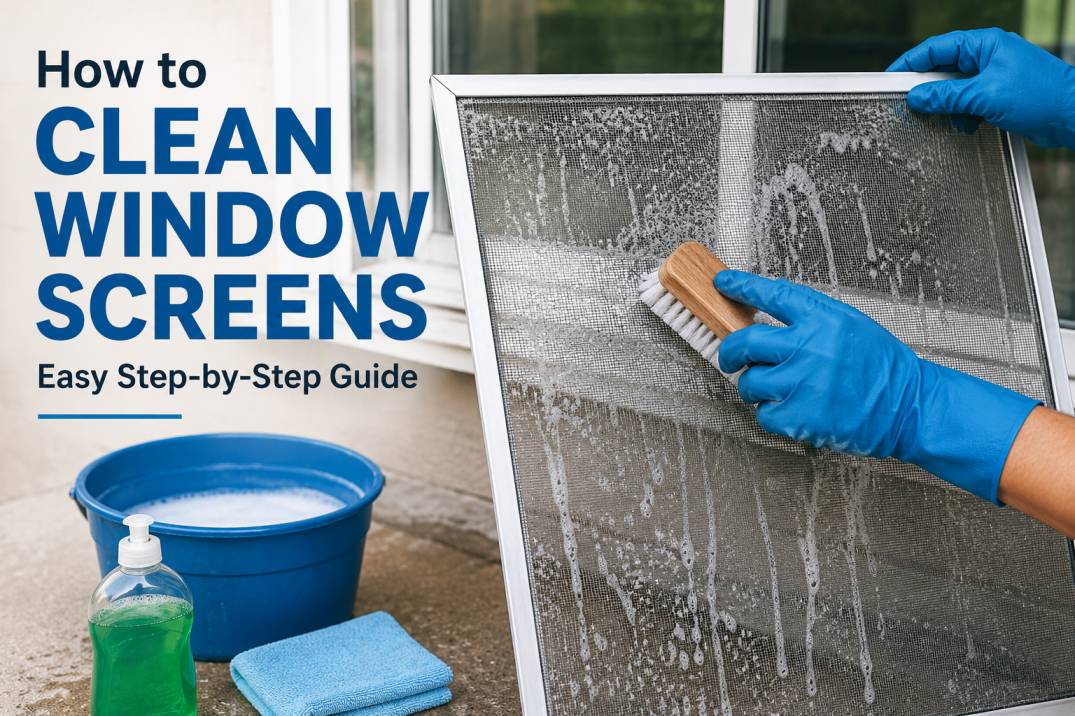
Dirty window screens can make clean windows look dusty, reduce airflow, and leave pollen and other debris sitting right where fresh air enters your home. Fortunately, cleaning window screens does not require expensive products or complicated equipment. For most screens, all you need is a soft brush or vacuum, mild dish soap, warm water, and a gentle way to rinse them. The key is to avoid putting too much pressure on the mesh.
For the best results, remove the screens when possible, clean them outdoors, and let them dry completely before putting them back.
What You’ll Need
Gather these supplies before you start:
- Soft-bristle brush
- Vacuum with a brush attachment
- Bucket
- Warm water
- Mild dish soap
- Sponge or microfiber cloth
- Garden hose with a gentle spray setting
- Clean towels
A vacuum or soft brush is useful for removing dry dust and cobwebs before water is introduced. You do not need harsh chemicals or abrasive cleaners for routine screen cleaning. If you have delicate fiberglass mesh, use especially light pressure because aggressive scrubbing can stretch or tear it.
You may like to read: Why The BadSeed Tech Carpio Workspace Upgrade is Dominating Desk Setups
How to Clean Window Screens
1. Remove the Screens Safely
If your window screens are designed to be removed, take them out before deep cleaning.
The exact removal method varies by window style, but many screens have tabs, clips, springs, or lift mechanisms. Release the screen carefully and keep the frame level as you remove it. If you’re cleaning several screens, label them or place them in order. This makes it easier to return each screen to the correct window.
Safety first: Never lean out of a window or use an unsafe position to reach a screen. If a screen is difficult to access from an upper floor, clean it in place or have someone handle the removal safely.
Once removed, inspect the mesh and frame for obvious damage before cleaning.
2. Remove Loose Dust and Debris
Do not immediately start scrubbing a dusty screen with soapy water.
First, remove loose material with a vacuum’s brush attachment or a soft-bristle brush. Clean both sides and pay attention to the corners and edges, where cobwebs and dirt often collect. This simple step prevents dry dust and grit from becoming muddy when water is added.
For screens with heavy pollen buildup, removing as much loose pollen as possible before washing also makes the wet-cleaning stage easier.
3. Wash the Screens
Fill a bucket with warm water and add a small amount of mild dish soap. Dip a soft brush, sponge, or microfiber cloth into the solution and gently clean the screen. Work across the mesh with light pressure rather than pushing hard against it. Clean both sides of the screen, including:
- The mesh
- Frame edges
- Corners
- Areas with visible stains or buildup
You are trying to loosen dirt, not force the brush through the mesh. Fiberglass screens can be particularly vulnerable to stretching and tearing when scrubbed too aggressively.
A small amount of soap is usually enough. Using too much can leave residue behind and make the screen attract dirt again.
4. Rinse Thoroughly
Rinse the screen with clean water using a garden hose on a gentle setting.
Start at the top and work downward so loosened dirt flows away from areas you’ve already cleaned. Turn the screen over and rinse the other side as well. Avoid blasting the mesh with high-pressure water. A pressure washer may seem convenient, but strong water pressure can damage the mesh or bend the frame.
Continue rinsing until all visible soap and dirt are gone.
5. Let the Screens Dry Completely
Drying is an important part of cleaning window screens.
Shake off excess water and stand the screens upright against a clean wall or fence. Position them so air can circulate around both sides.
You can gently blot excess water with a clean towel, but allow the screens to air-dry fully before reinstalling them. Drying time depends on temperature, humidity, sunlight, and airflow. Don’t rush this step simply because the mesh looks mostly dry.
Putting damp screens back into a window can trap moisture around the frame and create conditions for mildew or other moisture-related problems.
6. Inspect and Reinstall
Once the screens are completely dry, inspect them again.
Look for:
- Small holes or tears
- Sagging mesh
- Bent corners
- Loose frame sections
- Damaged clips or tabs
- Loose or worn spline
If everything looks good, reinstall the screen securely in its frame.
It’s also a good opportunity to clean the window tracks, sill, and frame while the screen is out. Otherwise, dirt from these areas can quickly transfer back onto your freshly cleaned screen.
How to Clean Window Screens Without Removing Them
You don’t always need to remove a screen for routine cleaning.
For a quick maintenance clean, start by gently vacuuming the screen with a brush attachment. Move slowly across the mesh to pick up dust, pollen, and cobwebs. Next, dampen a microfiber cloth with clean water or a mild soap-and-water solution. Wipe the screen gently without pressing hard against the mesh.
Work from top to bottom and clean the frame edges as well. This method is useful for light buildup, but removing the screen is usually better when it needs a thorough wash. Deep cleaning a screen in place can also allow dirty water to run into the window track.
How to Clean Screens With Pollen, Mold, or Heavy Grime
Some screens need more than a quick wash.
Heavy pollen
Start with a vacuum or soft brush to remove loose pollen. Then rinse the screen gently before washing it with mild soap and water.
If pollen is a recurring problem in your area, cleaning more frequently during high-pollen periods can prevent a thick layer from building up.
Mold or mildew
For small areas of mildew, a diluted white-vinegar-and-water solution can be used on some screens. Apply it to the affected area, allow it to sit briefly, and then gently scrub and rinse.
Always test a cleaning solution on an inconspicuous area first, particularly if you are unsure how the screen material or frame will react.
Avoid mixing vinegar with bleach or other cleaning products.
Screens with years of buildup
Old, heavily soiled screens are better handled in stages.
First vacuum or brush away loose debris. Then rinse with water, apply mild soapy water, gently scrub, and rinse again. Stubborn buildup may require repeating the process rather than using a stronger chemical or harder scrubbing.
If the mesh is already damaged, aggressive cleaning can make the problem worse.
Common Window Screen Cleaning Mistakes
A few cleaning habits can shorten the life of your screens.
Using too much pressure: Scrubbing aggressively can stretch or tear the mesh.
Using a pressure washer: High-pressure water can damage mesh and bend frames.
Skipping the dry-cleaning step: Scrubbing loose dirt while it is dry can push grit deeper into the mesh.
Using harsh chemicals: Strong cleaners, abrasive products, and ammonia-based solutions may damage mesh or finishes.
Using too much soap: Excess soap is harder to rinse away and may leave residue that attracts dirt.
Reinstalling screens while wet: Give them enough time to dry completely.
Ignoring the frame: Dirt often collects around corners and edges, so cleaning only the mesh leaves part of the screen dirty.
Forgetting window tracks: A clean screen can become dirty again if the surrounding track and sill are full of dust.
How Often Should You Clean Window Screens?
For most homes, cleaning window screens twice a year is a practical starting point, typically in spring and fall.
You may want to clean them more often if your home is exposed to:
- Heavy pollen
- Dusty roads or nearby construction
- Coastal air and moisture
- Frequent storms
- Lots of outdoor activity around the windows
- Pets that spend time near the windows
A useful routine is to vacuum or lightly brush screens between deep cleanings. Regular light maintenance makes the next full wash much easier.
Spring cleaning is particularly useful before you begin opening windows regularly. Fall is another good time to clean screens before a period when windows may stay closed.
When Should You Replace a Window Screen?
Cleaning won’t fix every screen.
Consider repairing or replacing a screen if you find a significant tear, large holes, badly stretched mesh, or a frame that no longer fits securely.
Replacement may also make more sense when the frame is badly bent, corners are broken, or the mesh has deteriorated across a large area.
Small damage can sometimes be repaired without replacing the entire screen. But if the screen no longer sits securely in the window, cleaning it is unlikely to solve the underlying problem.
Frequently Asked Questions
Can you clean window screens without removing them?
Yes. For light dust and pollen, gently vacuuming and wiping the screen while it remains installed can work well. For heavy dirt, removing the screen allows you to clean both sides more thoroughly and rinse it without getting dirty water into the window track.
What is the best cleaner for window screens?
For routine cleaning, warm water and a small amount of mild dish soap are usually sufficient. Strong chemicals are unnecessary for most household dirt and can damage some mesh or frame materials.
Can you pressure wash window screens?
It is better to avoid pressure washing window screens. High-pressure water can stretch or tear the mesh and may bend the frame. A garden hose on a gentle setting is a safer option.
How do you clean window screens with heavy pollen?
Vacuum or brush off loose pollen first, then rinse the screen gently with clean water. Wash it with mild soapy water, rinse again, and let it dry completely before reinstalling it.
How long does it take for window screens to dry?
Drying time varies with weather and humidity. Screens should remain outside or in a well-ventilated area until both the mesh and frame are completely dry. Avoid reinstalling them while they are still damp.
Should you clean window screens before or after cleaning the windows?
Clean the screens before doing the final window cleaning. Removing and washing screens can disturb dust and dirt around the window frame and tracks, so cleaning the glass afterward helps leave the entire window area looking fresh.
Keep Your Screens Cleaner for Longer
Clean window screens don’t require much maintenance once you’ve removed the heavy buildup.
Vacuum or brush them occasionally, wipe down the surrounding sills and tracks, and give the screens a deeper wash once or twice a year. Inspect the mesh while cleaning so small tears or damaged frames don’t go unnoticed.
The most important rule is simple: use mild cleaning products, gentle pressure, thorough rinsing, and complete drying. That combination is enough for most household window screens and helps keep them clean without unnecessarily wearing out the mesh.