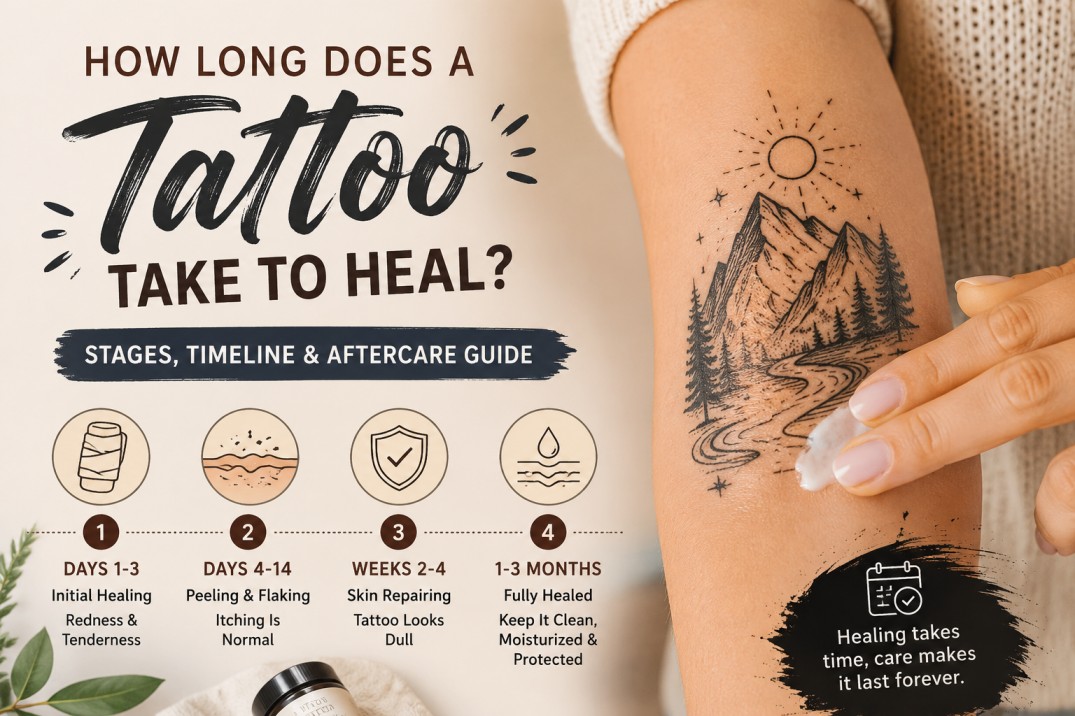
A new tattoo usually takes about 2 to 4 weeks to heal on the surface, but the skin underneath can continue repairing for several months. The exact timeline depends on factors such as the tattoo’s size, placement, ink coverage, and how your skin responds to the tattooing process.
A tattoo is essentially a controlled skin injury. During healing, redness and tenderness gradually give way to itching, peeling and flaking. The tattoo may also look dull or cloudy for a while before its final appearance becomes clearer.
So if your tattoo looks different from day to day, that does not necessarily mean something is wrong. Healing is a gradual process, not a single event.
Tattoo Healing Timeline
Here’s what you can generally expect as your tattoo heals.
Days 1–7: Redness, Tenderness and Oozing
During the first few days, your tattoo is a fresh wound. Mild redness, swelling, tenderness and warmth around the tattoo can be normal.
You may also notice a small amount of clear fluid mixed with excess ink. The skin can feel tight, sensitive or slightly sore.
Your tattoo artist will usually give you instructions about when to remove the initial bandage and how to clean the tattoo. Follow those instructions rather than changing the dressing schedule on your own. Once you’re allowed to clean the tattoo, use gentle washing and avoid scrubbing. Pat the area dry instead of rubbing it.
During the first week:
- Wash the tattoo gently according to your artist’s instructions.
- Keep your hands clean before touching it.
- Use a simple moisturizer or aftercare product recommended for healing tattoos.
- Wear loose clothing if fabric covers the tattoo.
- Avoid scratching, rubbing or picking the area.
- Avoid swimming and soaking the tattoo.
Mild redness and soreness should generally start settling rather than becoming increasingly severe. Cleveland Clinic notes that some redness, swelling, soreness and minor oozing can be normal during early healing.
Week 2: Itching, Peeling and Scabbing
Around the second week, many tattoos enter the itching and peeling stage. The skin may become dry and flaky, similar to what you might see after a sunburn. Small scabs can also develop. This can be one of the most frustrating parts of healing because the tattoo may feel extremely itchy.
Don’t scratch or pick at it.
Pulling away peeling skin or scabs before they’re ready can irritate the healing area and may interfere with proper healing.
Instead, continue gentle cleaning and use a suitable moisturizer when the skin feels dry. Cleveland Clinic recommends continuing to wash and moisturize during the first several weeks while avoiding picking or scratching.
Weeks 3–4: Dull or Cloudy Appearance
By weeks three and four, the surface of the tattoo may look much better, but it might not look like the finished tattoo yet.
Some people notice that their tattoo looks:
- Dull
- Cloudy
- Slightly faded
- Shiny
- Less sharp than it looked immediately after tattooing
This can happen because new skin is forming over the tattoo.
Don’t assume that a temporarily dull appearance means the ink has disappeared. Give the skin time to finish repairing before judging the final result.
For many people, most visible peeling and scabbing has settled by this point. However, larger or heavily shaded tattoos can take longer.
After One Month: Deeper Healing Continues
A tattoo can look completely healed on the surface while deeper layers of skin are still recovering.
This is why there isn’t one exact answer to how long a tattoo takes to fully heal.
Cleveland Clinic reports that the top layer is typically healed around the two-month mark, while deeper layers may take several more months. Healing varies with the tattoo’s size and location.
During this period, continue treating the skin gently and protect the tattoo from excessive sun exposure.
For more helpful tips and guides, explore xxbritsh for the latest articles on travel, family, and everyday life.
What Does a Normally Healing Tattoo Look Like?
Normal healing can include several changes that might initially seem concerning.
A healing tattoo may have:
- Mild redness and tenderness early on
- Slight swelling
- Small amounts of clear fluid or excess ink
- Itching
- Flaking and peeling
- Some scabbing
- A temporarily dull or cloudy appearance
- Mild dryness
The important thing is the overall direction. Normal irritation should gradually improve rather than become increasingly painful or inflamed. The American Academy of Dermatology notes that some redness, swelling, soreness, clear fluid, itching, flaking and scabbing can occur as a tattoo heals.
What Can Slow Down Tattoo Healing?
Not every tattoo heals at the same speed. Several factors can affect how long the process takes.
Tattoo size
A small linework tattoo generally involves less damaged skin than a large, heavily saturated piece. Larger tattoos can therefore take longer to settle.
Tattoo placement
Areas that experience frequent movement, friction or contact with clothing can be more difficult to heal comfortably. For example, a tattoo around a joint may experience repeated movement, while tattoos on the hands or feet can receive more daily friction.
Amount of ink and detail
A heavily shaded or densely colored tattoo can involve more work on the skin than a simple design. This may affect how long the area remains irritated.
Aftercare
Overwashing, scratching, picking, excessive friction and using irritating products can interfere with the healing process.
Good aftercare isn’t about constantly touching the tattoo. In many cases, gentle and consistent care is better than doing too much.
Sun exposure
UV exposure can fade tattoo ink over time, and newly tattooed skin is especially vulnerable while it heals. The AAD recommends protecting tattooed skin from the sun and, once the tattoo has healed enough for sunscreen, using broad-spectrum, water-resistant SPF 30 or higher.
How to Help Your Tattoo Heal Properly
Your tattoo artist should give you specific aftercare instructions because bandage types and tattoo techniques can differ. In general, these habits can help protect healing skin:
Keep it clean.
Wash gently using the method and frequency recommended by your artist. Avoid scrubbing.
Moisturize when needed.
A simple, suitable moisturizer can help prevent excessive dryness. The AAD recommends a water-based lotion or cream for dry tattooed skin.
Don’t pick.
Let peeling skin and scabs come away naturally.
Avoid soaking.
Don’t swim or keep a healing tattoo submerged in water until it has healed.
Reduce friction.
Loose, breathable clothing can help prevent rubbing against the tattoo.
Keep it away from direct sunlight.
During healing, cover the tattoo with clothing and avoid unnecessary UV exposure. After it has healed, sunscreen can help protect the tattoo from fading.
When Should You Worry About an Infected Tattoo?
Some redness, soreness and swelling can be part of normal healing. The concern is when symptoms get worse instead of better.
Contact a healthcare professional if you notice symptoms such as:
- Increasing or severe pain
- Redness that spreads or becomes darker
- Significant swelling or heat
- Pus or substantial drainage
- Fever or chills
- Red streaks extending away from the tattoo
- A worsening rash or painful bumps
The American Academy of Dermatology specifically advises seeking medical care for signs such as spreading or worsening redness, increasing pain, pus, fever or chills.
Cleveland Clinic also lists worsening pain, fever, increasing redness, significant drainage and red streaks among warning signs of tattoo infection.
If you develop symptoms that concern you, don’t try to diagnose an infection based only on pictures online. A healthcare professional can assess the tattoo and determine whether treatment is needed.
Frequently Asked Questions
How long does a tattoo take to heal?
Most tattoos take roughly 2 to 4 weeks for the visible surface to heal, but deeper skin can continue repairing for several months. Larger or more complicated tattoos may take longer.
How do I know if my tattoo is healed?
A tattoo is generally approaching surface healing when there is no more peeling or scabbing, the skin feels smooth, and redness and tenderness have settled. However, deeper healing can continue after the tattoo looks normal.
Is peeling normal after getting a tattoo?
Yes. Peeling and flaking are common during the healing process. Avoid pulling the skin off or scratching it. Let it shed naturally.
Why does my tattoo look dull while healing?
A temporary dull or cloudy appearance can occur as new skin forms over the tattoo. The appearance can change again as the skin finishes healing.
Can I swim with a new tattoo?
It’s best to avoid swimming and other prolonged water exposure while the tattoo is still healing. Submerging fresh tattooed skin can increase irritation and infection risk.
When can I put sunscreen on my tattoo?
Don’t apply sunscreen to an open or actively healing tattoo. During healing, protect it from direct sunlight with clothing and shade. Once the skin has fully healed, use broad-spectrum SPF 30 or higher to protect the tattoo and surrounding skin from UV damage.
Why is my tattoo still itchy?
Mild itching can occur during peeling and healing. Avoid scratching because it can irritate the area and interfere with the healing process.
Can a tattoo take longer than four weeks to heal?
Yes. Four weeks is not a deadline. Some tattoos take longer to settle, particularly larger or more heavily worked pieces. The surface may look healed while deeper layers continue recovering.
Final Thoughts
So, how long does a tattoo take to heal? For most people, expect around 2 to 4 weeks for the surface, while deeper skin healing can continue for several months.
The best approach is patience. Keep the tattoo clean, moisturized according to your aftercare instructions, protected from unnecessary friction and out of direct sun while it heals. Don’t scratch or pick at peeling skin. Most importantly, pay attention to how your tattoo is changing. Normal healing should gradually improve. If pain, redness, swelling or drainage is getting worse instead of better, seek medical advice rather than assuming it’s part of the healing process.