
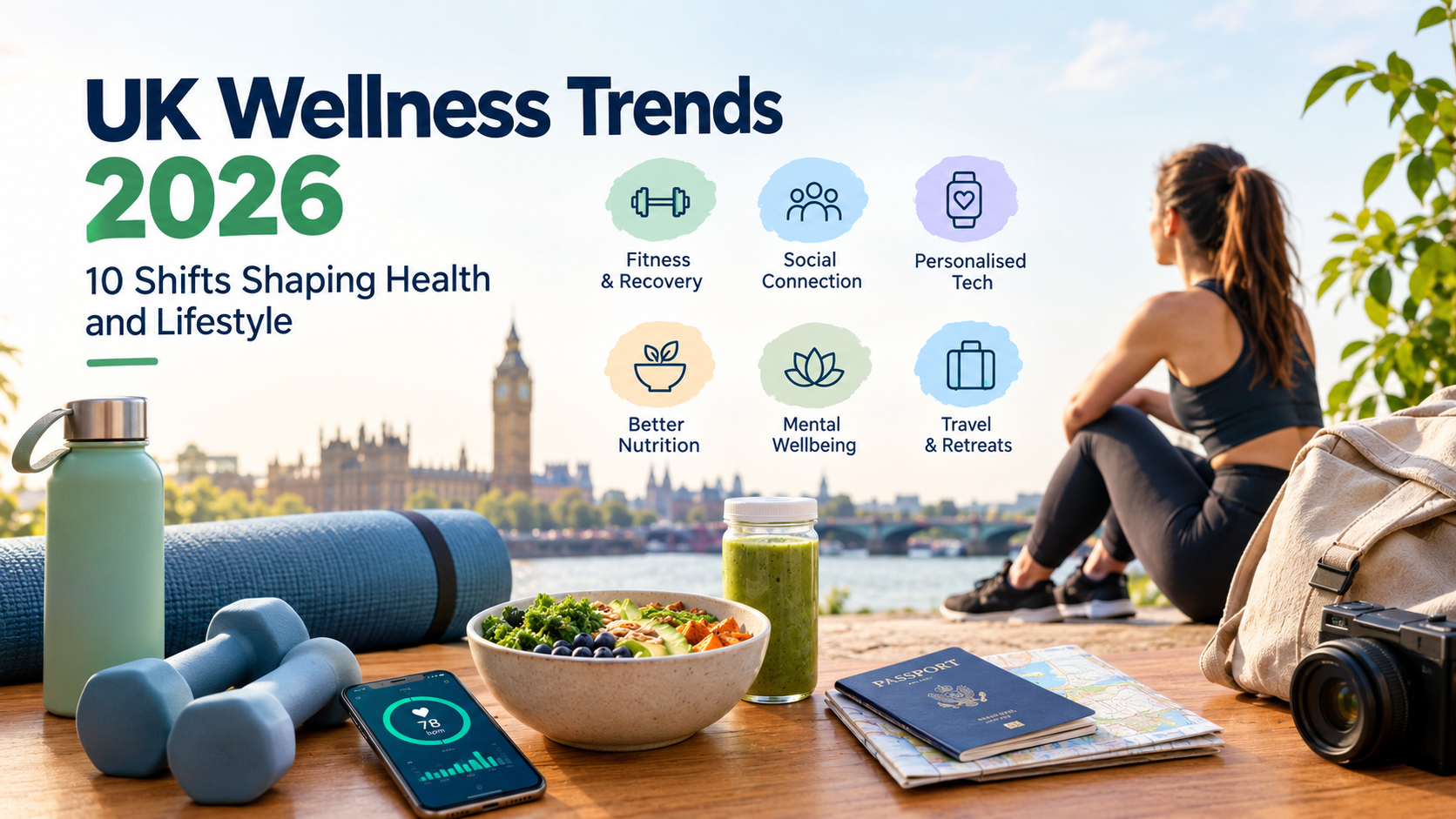
The biggest UK wellness trends in 2026 are recovery-first fitness, social exercise, data-led personalisation, functional nutrition, nervous-system care, purpose-led travel, tailored retreats, healthspan, midlife support and affordable offline habits. Together, they show a shift away from extreme routines towards practical, evidence-aware wellness that fits everyday life.
This article explains why these trends are growing in the UK, how they affect fitness, self-care, food and travel, and which ones offer genuine value rather than marketing hype.
Table of Contents
- UK Wellness Trends 2026 at a Glance
- What Is Driving Wellness in the UK?
- Recovery-First Fitness
- Social Fitness
- Personalised Wellness
- Functional Nutrition
- Nervous-System Care
- Wellness Travel
- Personalised Wellness Retreats
- Healthspan and Longevity
- Midlife Wellness
- Affordable and Analogue Wellness
- Which Trends Are Worth Following?
- Frequently Asked Questions
UK Wellness Trends 2026
| Wellness trend | What is changing in 2026? |
| Recovery-first fitness | Rest, sleep and mobility are becoming part of training |
| Social fitness | Run clubs, group workouts and wellness spaces are building communities |
| Personalised wellness | Wearables and AI are helping people adapt routines |
| Functional nutrition | Protein, fibre and gut-health products are entering everyday foods |
| Nervous-system care | Breathwork, sleep and gentle movement are shaping self-care |
| Wellness travel | Holidays are increasingly planned around recovery, movement and nature |
| Personalised retreats | Generic packages are giving way to goal-led programmes |
| Healthspan | Longevity is focusing more on healthy, independent years |
| Midlife wellness | Support is becoming more specific to life stage and individual needs |
| Affordable wellness | Home cooking, walking and digital breaks are countering expensive optimisation |
What Are Driving Wellness Trends in the UK in 2026?
UK wellness is being shaped by four connected pressures: stress, screen fatigue, demand for personalisation and the rising cost of living. People still want to invest in their health, but they are becoming more selective about where their time and money go. Experiences, community and routines that fit everyday life increasingly matter more than collecting products.
A 2026 Nationwide spending survey of 1,202 customers found that 36% said living a healthier lifestyle was influencing their spending. At the same time, 54% were concerned about the cost of living. Although this customer survey should not be treated as representative of every UK household, it highlights the tension shaping wellness in 2026: people value their wellbeing but expect clearer value from what they buy.
1. Recovery Becomes Part of the Workout
Recovery is no longer being treated as a break from fitness. In 2026, sleep, mobility work, lighter sessions and planned rest days are becoming part of the training programme itself. Wearables can help identify patterns in sleep and resting heart rate, but their readiness scores are estimates. Consistent energy, performance and recovery remain more meaningful than chasing a perfect daily score.
2. Fitness Becomes a Social “Third Place”
Run clubs, walking groups, Hyrox training and community classes are turning exercise into a place to connect. The attraction is not only the workout; it is the structure, accountability and sense of belonging that exercising with others can provide.
This UK fitness trend does not require an expensive wellness club. Free local groups and workplace teams can deliver the same social value. What matters is moving from isolated exercise towards an activity people genuinely want to return to.
3. Personalised Wellness Shifts from Guesswork to Feedback
Personalised wellness uses information about sleep, movement, goals and daily routines to make health plans more relevant. Wearables may reveal that late exercise affects sleep, while an AI tool can organise meals or workouts around a busy schedule.
Useful Personalisation vs False Precision
These tools are most helpful when they identify patterns, not when they claim to know the perfect diet, supplement or diagnosis. Consumer technology cannot understand someone’s complete medical history, and users should check how apps store sensitive health data. Good personalisation supports informed decisions without replacing professional care.
4. Functional Foods Face a Usefulness Test
Protein drinks, high-fibre snacks, probiotic foods, collagen products and fortified beverages are becoming more common. Their appeal comes from convenience, but adding a popular nutrient does not automatically turn an ordinary product into a healthier choice.
Look Beyond the Front Label
Before buying a functional product, check what it provides per serving, its sugar and salt content, and whether it solves a genuine dietary need. Proteinmaxxing shows how a useful nutrient can become marketing excess. Protein matters, but so do fibre, food variety and the quality of the overall diet.
5. Nervous-System Care Enters Everyday Self-Care
Breathwork, consistent sleep, gentle movement, journalling and short screen breaks are becoming practical ways to manage everyday stress. Their popularity comes from being easier to repeat than an intense wellness reset.
Five minutes of slower breathing or a brief walk after work may be more sustainable than a complicated morning routine. However, claims about instantly “resetting” the vagus nerve oversimplify how the body responds to stress. These practices may support relaxation, but they are not guaranteed treatments for anxiety, trauma or persistent symptoms.
6. Wellness Holidays Offer More Than a Spa Spa Break
Wellness travel in 2026 is becoming purpose-led. UK travellers are choosing walking holidays, fitness camps, sleep-focused stays and nature retreats that combine time away with recovery, movement or a skill they can continue at home.
The British Airways Travel Trends 2026 report, based partly on a weighted YouGov survey of 2,104 UK adults, found that 54% considered holidays important for managing or relieving stress. The strongest wellness trips provide more than temporary escape; they leave travellers with a useful habit, skill or better understanding of how they recover.
7. Wellness Retreats Become Tailored, Not Timetabled
Retreats are moving away from identical schedules for every guest. Programmes are increasingly organised around specific goals such as sleep, fitness, burnout recovery, menopause support or emotional wellbeing.
What Should You Check Before Booking?
Look beyond words such as “luxury”, “clinical” and “transformational”. Check:
- Who delivers the programme and what qualifications they hold
- Whether the promised outcome is realistic
- What the total price includes
- Whether the activities suit your health and fitness level
- What support or habits continue after the retreat
A simple retreat with qualified staff and transparent expectations may offer more value than an expensive programme built around unproven technology.
8. Longevity Focuses on Healthspan, Not Hype
The useful side of longevity is healthspan: the years a person lives with good health, mobility and independence. This shifts attention from looking younger to maintaining strength, cardiovascular fitness, sleep quality and everyday physical ability.
Commercial biological-age tests and costly longevity clinics may offer interesting data, but a single score cannot represent someone’s complete health. Many habits associated with healthier aging remain straightforward: regular movement, maintaining muscle, eating a varied diet, sleeping consistently and using appropriate preventive healthcare.
9. Midlife Wellness Becomes Life-Stage Specific
Midlife wellness is becoming more relevant to the physical changes people actually experience. Perimenopause, menopause, bone health, muscle loss, cardiovascular health, sleep and metabolic wellbeing are increasingly being considered together rather than as unrelated concerns.
For women, this means better-informed conversations about menopause symptoms and available support. For men, the focus is expanding beyond muscle building to include mobility, stress and long-term cardiovascular health. The trend adds value when it leads to appropriate support, not when every midlife concern is blamed on a supplement deficiency.
UK wellness is being shaped by four connected pressures: stress, screen fatigue, demand for personalisation and the rising cost of living. These changes reflect wider UK lifestyle and consumer trends, where technology, spending habits and everyday routines increasingly overlap. People still want to invest in their health, but they are becoming more selective about where their time and money go.
10. Low-Cost, Offline Wellness Makes a Comeback
Walking, home cooking, outdoor time, paper journalling and device-free evenings are gaining ground as alternatives to expensive wellness optimisation. In the Nationwide customer research cited earlier, 24% planned to cook at home more often, showing how financial and healthy lifestyle choices can overlap.
Analogue wellness also addresses screen fatigue. Leaving a phone behind during a walk or choosing an offline hobby creates a genuine break that another wellbeing app cannot provide. This reflects JOMO, the joy of missing out, and a broader move towards fewer products, less tracking and habits that remain useful after the trend disappears.
Which 2026 Wellness Trends Are Actually Worth Following?
The strongest wellness trends build on established health foundations. Emerging tools can still be useful, but their value depends on how they are used and whether their claims match the available evidence.
| Evidence level | Examples | Practical approach |
| Strong foundations | Consistent sleep, regular movement, varied food and social connection | Make these the base of a wellness routine |
| Useful when applied well | Group fitness, wearables, micro-habits and qualified retreats | Choose according to personal needs, cost and sustainability |
| Promising but uncertain | Consumer biological-age tests, nootropics and wellness devices | Check the evidence before spending money |
| High-risk or misleading | Parasite cleanses, extreme supplement stacks and AI self-diagnosis | Avoid unsupported claims and seek qualified advice where necessary |
Summary
The biggest UK wellness trends of 2026 reflect a move towards recovery, connection, personalisation and practical value. Social fitness, functional nutrition, nervous-system care and wellness travel are growing, but simpler habits remain the strongest foundation. Consumers are becoming more selective, choosing routines and experiences that fit their health, budget and everyday lives instead of following every new claim.
Frequently Asked Questions
What are the biggest wellness trends in the UK for 2026?
The main trends include recovery-first fitness, social exercise, personalised wellness technology, functional nutrition, nervous-system care, purpose-led travel, personalised retreats, healthspan, midlife support and affordable analogue habits. Together, they show a shift from extreme optimisation towards routines that are more individual, social and sustainable.
What fitness trends are growing in the UK in 2026?
Recovery-led training, run clubs, Hyrox, group walking, strength training and community fitness events are gaining attention. The common themes are measurable progress, social connection and greater respect for rest. Fitness is increasingly treated as part of a balanced lifestyle rather than a separate pursuit based only on intensity.
What does personalised wellness mean?
Personalised wellness adapts health and lifestyle choices to an individual’s goals, routine, preferences and responses. It may use information from wearables, questionnaires or health apps. Personalisation can improve relevance, but consumer tools should support—not replace, professional diagnosis and treatment.
Is wellness travel becoming more popular among UK travellers?
Yes. Wellness is increasingly influencing how UK travellers choose and structure holidays. Fitness camps, nature stays, sleep-focused hotels and retreats centred on recovery or stress relief are examples. Travellers are also looking for experiences and habits they can continue after returning home.
Are wellness retreats worth the cost?
A retreat may be worthwhile when it has a clear purpose, appropriately qualified staff, transparent pricing and realistic outcomes. A premium location or advanced equipment does not guarantee better results. Compare the programme with less expensive ways of achieving the same goal before booking.
Which wellness trends can be followed on a budget?
Walking, free community exercise groups, home cooking, consistent sleep, short breathing exercises, outdoor time and scheduled breaks from screens require little or no spending. These habits may be less exciting than high-tech treatments, but they are usually easier to maintain and integrate into daily life.