
Imagine running a global import export empire right from your couch. Starting an online business from home eliminates massive overhead costs while giving you 100% operational flexibility. However, shifting from a domestic setup to the international trade arena takes systematic execution. If you want to outrank major competitors and secure high-paying clients, you need an actionable strategy. Here is your comprehensive guide to mastering modern logistics, funding, and supplier sourcing.
The Modern Interconnected Trade Landscape
Before investing your capital and time, you must understand the current global operational landscape. The global trade ecosystem has shifted drastically, becoming highly interconnected, so buyers are no longer confined to purchasing from their own regional borders. A retail store owner can easily discover and order products from across the globe through diverse e-commerce platforms and automated digital supply chain corridors. Starting your entrepreneurial journey from your house is the smartest way to scale risk-free in today’s digital economy.
The rapid economic growth within specific corridors makes this sector a prime target for remote founders, but success depends on managing specific lifestyle and structural shifts:
- Drastic Cost Reductions: By avoiding commercial rent, industrial utility rates, and daily commuting expenses, you keep your initial overhead remarkably low.
- Absolute Autonomy: You choose your working hours, select your trading niches, and establish your operational workflows.
- The Discipline Gap: Domestic distractions can easily derail your focus, making strict log-off times non-negotiable to maintain a healthy work-life balance.
Defining Your Operational Role: The Intermediary Frameworks
You do not need a multi-million dollar conglomerate to become an international trader, as official data shows small outfits make up the vast majority of active exporters. The big corporations only comprise a tiny fraction of the market, leaving the share to agile, home-based small firms. To position yourself effectively, you must understand the primary intermediary frameworks available to a remote founder.
Export Management Company (EMC)
An EMC operates essentially as an outsourced export department for a domestic manufacturer that wants to sell its products overseas but lacks internal expertise. As an EMC, you handle the entire workflow: hiring foreign dealers, invoicing international customers, managing promotions, overseeing packaging compliance, and arranging logistics. You operate as an agent rather than a principal, meaning you rarely take physical title to the goods. Your income is generated through a commission structure or a flat monthly retainer plus commission.
Export Trading Company (ETC)
While an EMC starts with products from a domestic factory and hunts for foreign buyers, an Export Trading Company attacks the opposite side of the transaction coin. An ETC identifies precisely what foreign buyers are actively looking to purchase and then hunts down domestic manufacturers willing to supply those commodities. In this model, you focus heavily on demand aggregation as a sourcing engine for international clients. Depending on the contract structure, you may either work on a commission basis or buy the products outright to fulfill the customer’s purchase order.
The Import/Export Merchant
If you want to act as a completely independent free agent, operating as an import/export merchant is the most direct pathway. In this framework, you do not have a fixed, exclusive client base, and you are not tied down to representing specific factories. Instead, you scan global market trends, identify immediate consumer demand gaps, purchase the inventory outright, and handle the shipping, branding, and reselling yourself. Because you take title to the merchandise, you assume the full financial risk of the inventory but pocket the entirety of the profit margins.
High-Demand Product Niches to Trade: Home-Based Business Ideas

Your foundational choice rests on whether you will build an enterprise centered around physical goods or specialized expertise. When brainstorming different online business ideas, you must first decide whether to offer high-margin services or scalable products. If you select physical goods, choosing the right category is vital to achieving quick profitability.
High-Value Agricultural & Specialty Goods
- Spices & Saffron: Tapping into established agricultural lines presents a massive opportunity. Commodities like cardamom, cinnamon, turmeric, and high-value saffron maintain an evergreen global demand, particularly within Western and Middle Eastern consumer sectors. Because these items carry low volume but high market value, shipping costs are minimal compared to your potential profit margins.
- Specialty Tea Varieties: Sourcing high-quality, organic green teas, matcha powders, or herbal blends directly from regional producers allows you to establish an upscale brand.
Consumer Lifestyle & Fashion Utilities
- Apparel & Sustainable Footwear: Starting a clothing or footwear trading business allows you to capitalize on rapid e-commerce trends. By partnering with local manufacturers in production hubs, you can source unique styles and introduce them directly to international digital storefronts while avoiding big corporate competition.
- Cosmetics & Beauty Products: Sourcing trendy skincare lines, botanical cosmetics, or specialized grooming items from manufacturing hubs yields massive returns when driven by smart digital targeting.
Industrial, Functional, & Resource Trading
- Automotive Spare Parts: Sourcing quality car components and distributing them globally is a resilient, non-seasonal business model. By forming relationships with component factories, you can supply specialized or aftermarket spare parts to mechanic networks and wholesale distributors across borders.
- Used & Second-Hand Goods: Exploring the circular economy by importing and exporting pre-loved items, vintage collectibles, or refurbished electronics is an exceptional way to promote sustainability while capturing high margins.
Legal Foundations, Structuring, and Regional Compliance
Skipping the legal legwork is one of the most dangerous mistakes a new entrepreneur can make. To operate like a true professional and protect your personal assets from corporate liabilities, you must establish a compliant corporate foundation from day one.
Choosing Your Corporate Legal Structure
Before launching, analyzing the operational differences and legal protections of a sole proprietorship vs llc is critical for your long-term protection. While a sole proprietorship requires zero initial paperwork and minimal setup fees, it offers absolutely no asset protection, leaving your personal assets vulnerable. Conversely, registering a Limited Liability Company (LLC) creates an ironclad legal wall between your personal wealth and your business operations. An LLC signals to foreign manufacturers, customs brokers, and banking institutions that you are a legitimate, professional enterprise.
Securing Corporate Verification and Multi-Currency Accounts
Once your corporate entity is officially approved, you must immediately secure your Employer Identification Number (EIN) from the relevant federal tax authority. Never mix personal and business funds; instead, use your EIN to open a dedicated, corporate business bank account. For global trade, your banking setup must be capable of holding, sending, and receiving multiple international currencies simultaneously. Utilizing modern, borderless business accounts allows you to receive payments in local currencies and convert them with minimal fees, protecting your profit margins.
Navigating Customs Compliance and Residential Zoning
Every country enforces strict, specific regulatory frameworks for goods crossing its borders. If you are importing or exporting commodities, you must conduct detailed compliance research before executing your first order to avoid costly delays, fines, or border seizures.
- Digital Customs Portals: Familiarize yourself with automated customs clearance platforms to submit mandatory import-export documentation electronically.
- Product Testing & Labeling: Certain categories, specifically pharmaceuticals, agriculture, cosmetics, and livestock, require strict health certifications and specialized import licenses.
- Zoning & HOA Rules: Verify that your local municipal residential zoning laws and Homeowners Association (HOA) regulations permit you to run an online business from home.
Financial Engineering: Managing Cashflow and Revenue Models
Understanding your numbers is the ultimate differentiator between a failing side-hustle and a highly profitable global enterprise. Most small businesses do not fail due to a lack of sales; they fail because of a catastrophic failure in cash flow management.
The Trade Cashflow Trap
In international trade, cash flow cycles are exceptionally extended because you often have to pay a manufacturing facility a significant deposit upfront to begin production. Ocean freight, customs clearance, and extended customer payout cycles add another lengthy period of transit time. This means your capital can be completely locked up for several months before you see a single dollar of revenue. If you do not plan your cash reserves perfectly, you will run out of money to pay your basic operating utilities.
Leveraging Inventory Financing
To bridge this critical cash gap, savvy remote founders utilize specialized funding mechanisms and proper financial allocation to keep their supply chain moving smoothly. Instead of draining your cash reserves, an inventory financing provider uses your verified purchase orders or the raw materials themselves as collateral to issue a revolving loan. This funding allows you to pay your manufacturing partners immediately, keep your supply chain moving smoothly, and cover your shipping liabilities without stalling business growth.
The Intermediary Pricing Blueprint
When calculating the price of your services and products, you must ensure your business model covers all liabilities while remaining highly competitive. If you operate as an EMC or agent, you can apply two primary methods:
The Commission Method
You apply a standard, baseline markup directly on top of the production cost of the products. For example, if a line of sustainable footwear costs a certain amount to manufacture, your base commission is fixed per unit. You must then add all freight, customs duties, insurance, and third-party representative fees to build the final landed price for the buyer.
The Flat Retainer Matrix
If a product is highly specialized or faces steep regulatory hurdles, relying solely on a performance commission is too risky. In this scenario, you must charge a flat monthly retainer to cover your operational costs. To calculate this correctly, factor in three non-negotiable variables: direct labor and materials, indirect administrative overhead, and a clean profit factor added on top to ensure the business compounds wealth.
Technical Logistics: Demystifying Incoterms and Documentation
International shipping is governed by strict, standardized protocols that define exactly who is legally responsible for the goods at any given point during global transit.
Deciphering Core Incoterms
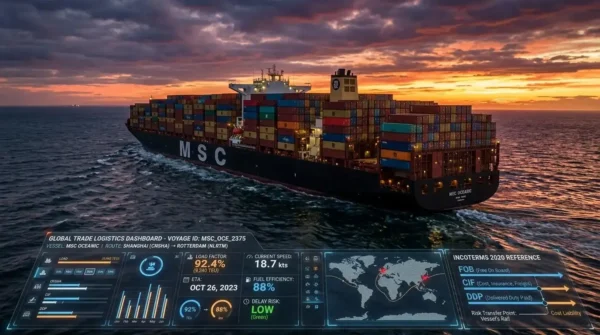
Incoterms are three-letter international commerce codes that establish the precise moment risk, liability, and shipping costs shift from the seller to the buyer. Understanding these terms prevents massive legal and financial misunderstandings:
- EXW (Ex Works): The manufacturer’s only responsibility is to make the goods available at their factory floor, leaving you fully responsible for arranging local pickup, international export clearance, and ocean transit.
- FOB (Free on Board): The seller pays to transport the goods to the local shipping port, and the legal risk and subsequent shipping costs transfer to you once the cargo passes over the ship’s rail.
- CPT (Carriage Paid To): The seller pays for international freight forwarder transit, but the risk of loss transfers to the buyer the moment the goods are handed over to the first carrier.
The Mandatory Shipping Paperwork Checklist
To ensure your cargo glides seamlessly through international borders without incurring expensive port storage fees, you must master the preparation and tracking of five foundational documents:
- Pro Forma Invoice: A preliminary bill sent by the seller before production begins, detailing the exact specifications, unit prices, and agreed Incoterms.
- Commercial Invoice: The official legal document issued once the goods are ready for transit, detailing the exact value used by customs officers to assess duties.
- Packing List: An exhaustive breakdown detailing exactly how the cargo is packaged, including dimensions, weights, and serial numbers.
- Bill of Lading / Air Waybill: The most important document in global trade, acting as a legally binding contract of carriage and a document of title.
- Electronic Export Information Filing: An electronic filing used for significant shipments to report trade statistics and ensure full compliance with international export regulations.
Virtual Warehousing: Running an Inventory-Free Setup From Home
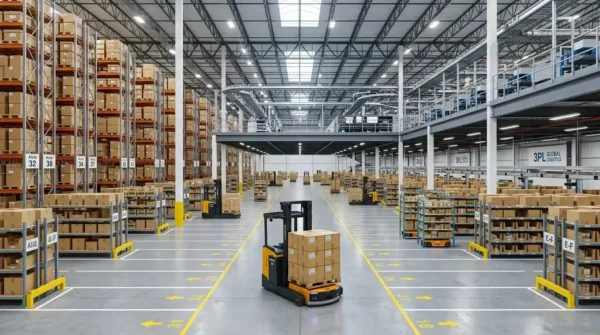
One of the greatest misconceptions about running an import-export business from home is that you need a massive garage or a physical backyard warehouse to store palettes of cargo. Physical proximity to your inventory is entirely obsolete.
Leveraging Third-Party Logistics (3PL)
Modern remote traders use a powerful operational framework known as Virtual Warehousing or 3PL integration. Instead of shipping goods to your home address, your international freight forwarders deliver the cargo directly to a strategically located Third-Party Logistics facility near your primary consumer markets. These specialized warehouses integrate directly with your online systems to automatically pick, pack, and ship orders straight to the end user. You never touch the physical product, keeping your operational focus locked on scaling trade routes, managing client relationships, and driving digital growth from your laptop.
Utilizing Smart Digital Shipping Tools
To manage this virtual supply chain smoothly, you can leverage automated cloud software solutions provided by major global logistics networks. Integrated platforms give you complete, real-time visibility into your entire logistics pipeline, transforming manual headaches into a simple digital dashboard. With a few clicks, you can schedule automated freight pickups from a factory, track customs clearance milestones as the ship crosses the ocean, and receive automated notifications the exact moment your 3PL facility receives the inbound cargo.
Minimum Viable Marketing: Finding Suppliers and Securing Buyers
You can establish the most flawless legal entity, set up the perfect borderless bank accounts, and pick an incredibly lucrative niche—but your enterprise will disintegrate if you do not have a predictable strategy to acquire verified suppliers and legitimate buyers.
Executing Ironclad Supplier Due Diligence
Finding factories to produce your goods is exceptionally accessible today through global digital sourcing platforms. However, because you are managing operations remotely, you must execute rigorous due diligence to protect your capital from fraudulent operators:
- Verify Credentials: Always filter for suppliers who hold independent, third-party onsite verifications and utilize secure escrow payment platforms.
- Mandatory Sample Testing: Never purchase a full shipping container of goods without requesting an initial product sample first to analyze build quality and material durability.
- On-Site Virtual Audits: If you cannot travel to the factory physically, hire a local, independent third-party inspection agency to visit the production facility and provide a comprehensive report.
The Targeted, High-Value Outreach Framework
To find credit-worthy international buyers for your products, skip expensive, passive outbound blogging or untargeted social media advertising. Instead, execute a highly targeted digital marketing strategy engineered around raw, direct value injection. First, use corporate directories and professional networks to compile a highly specific list of retail chain buyers, regional distributors, or e-commerce store owners who serve your exact target audience. Next, analyze their current public product offerings to spot weak supply chains, consistent out-of-stock items, or crushed retail margins.
Finally, develop a short, high-impact pitch showing them precisely how your home-based import-export framework can streamline their operations, secure lower unit costs, or provide access to premium product variations. Offer a frictionless call to action, such as inviting them to a brief call to review product samples. This direct, high-value strategy cuts through corporate noise and positions you immediately as an elite trade partner rather than an annoying salesperson.
Conclusion
Building a global import-export operation from home eliminates the need for expensive infrastructure while opening access to massive international distribution markets. By prioritizing an LLC structure, outsourcing fulfillment to 3PL partners, mastering basic documentation, and using direct outreach to buyers, you can safely scale a lean and highly profitable enterprise from your laptop.
“Disclaimer: This global trade and logistics guide is published by XXBritsh for educational purposes. Always consult with a licensed customs broker or legal professional before executing international shipments.”
Frequently Asked Questions (FAQs)
What are the best home-based business ideas for beginners?
The most profitable home-based business ideas are service-oriented models or digital trade intermediary roles, such as operating as an Export Management Company (EMC). These models require virtually zero upfront capital or physical inventory footprint, meaning you only need a laptop and internet to launch safely.
When looking at a sole proprietorship vs. LLC, which is better for a home setup?
An LLC is superior for long-term protection. While a sole proprietorship requires less paperwork initially, it offers zero asset protection. An LLC creates a secure legal wall that shields your personal savings, home, and property if your trade business faces any legal or customs disputes.
Do small business owners working from home have to pay full commercial taxes?
No, home-based small business owners can lower their tax liability by claiming the home office deduction. This allowance lets you write off a direct percentage of your residential rent, utilities, and internet bills based on the precise square footage your office space occupies.
How can I maintain a healthy work-life balance when my office is at home?
Achieving a sustainable work-life balance requires strict boundaries. You must establish set working hours, dress professionally to signal performance to your brain, and physically exit your dedicated workspace when the workday ends to prevent burnout.
What is the fastest digital marketing strategy to land my first client?
The fastest digital marketing strategy for a new home setup is direct, high-value outreach. Identify ideal corporate buyers, find a supply chain gap in their current operations, and send a short message showing them exactly how to fix it or lower costs.
What are the average startup costs to build an online business from home?
If you launch a digital service business or act as a trade agent, your initial startup costs can be minimal, covering basic domain registration and software tools. For product-based models, you may need a small budget to fund initial inventory samples.
Why should I open a separate business bank account immediately?
Opening a dedicated business bank account prevents the mixing of personal and business funds. This is a critical requirement to maintain the legal liability protection of your LLC. It also makes your expense tracking simple when tax season arrives.
How do I define my target audience without spending money on market research?
You can identify your target audience for free by analyzing your competitors’ client lists on professional networks. Look at who is actively buying from them, identify small gaps in their offerings, and tailor your pitch to solve those specific problems.
Can I run a physical product online business from home without storage space?
Yes, by utilizing the 3PL or export agent model. This framework allows you to act as an intermediary where consumer orders are automatically routed to a third-party warehouse that handles packaging and shipping, keeping your home completely inventory-free.
What is the biggest trap to avoid when starting an entrepreneurial journey at home?
The biggest pitfall at the start of any entrepreneurial journey is planning paralysis. Spending months trying to build a flawless website or writing endless business plans will stall progress. Focus instead on setting up your legal entity and pitching to clients.