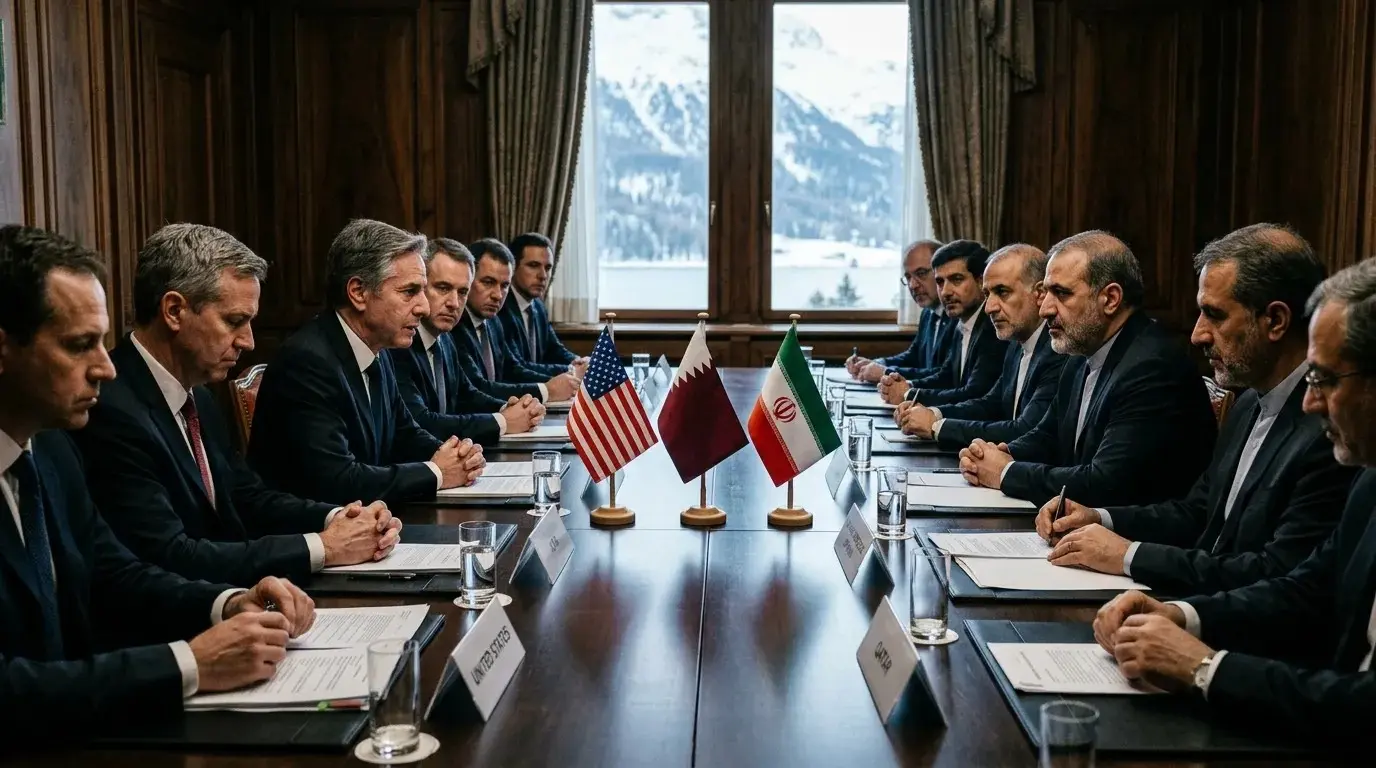
The structural stability of West Asian geopolitics has reached its most critical inflection point today, June 21, 2026, marking Day 114 since the outbreak of direct warfare. Following the landmark diplomatic breakthrough on June 17, when Iranian President Masoud Pezeshkian and United States President Donald Trump electronically endorsed the interim Islamabad Memorandum of Understanding (MoU), high-level diplomatic delegations have officially convened at the ultra-secure luxury resort of Bürgenstock, overlooking Lake Lucerne in Switzerland.
The primary objective of these technical-level talks is to operationalize the 14-point Islamabad framework and navigate a fragile 60-day stabilization window. However, this critical diplomatic track is facing immediate collapse due to a dramatic escalation in maritime brinkmanship inside the Strait of Hormuz and severe ceasefire spoilers along the Israel-Lebanon border.
The Bürgenstock Summit: High-Stakes US-Iran Delegations and the Tripartite Dilemma
The Swiss diplomatic venue opened under unprecedented military and federal security protocols. The negotiation framework is designed as a structured follow-up to transition the preliminary June 17 cessation of hostilities into a comprehensive, long-term regional treaty.
The Diplomatic Lineup and Core Power Brokers
- The United States Delegation: Led by Vice President J.D. Vance, who landed at Emmen Air Base at 05:59 AM (08:59 PKT). The American team features high-profile transactional strategists, including President Trump’s Special Envoy Steve Witkoff and senior adviser Jared Kushner, indicating that Washington is approaching the conflict resolution through an economic leverage lens.
- The Islamic Republic of Iran Delegation: Controlled by Iranian Parliament Speaker Mohammad Bagher Ghalibaf (acting as head negotiator) and Foreign Minister Abbas Araghchi. The delegation also includes senior officials from the Central Bank of Iran and the Ministry of Petroleum, signaling Tehran’s hyper-focus on immediate financial relief.
- The International Mediators: Serving as the central guarantors of the Islamabad Memorandum, Pakistani Prime Minister Shehbaz Sharif, military chief Field Marshal Asim Munir, and Qatari Prime Minister Sheikh Mohammed bin Abdulrahman Al Thani have arrived at Bürgenstock to actively moderate the closed-door sessions.
The Immediate Agenda: Assets, Nuclear Blending, and Leverage
Iranian state broadcaster IRIB confirmed that an emergency tripartite meeting involving Iran, the United States, and Qatar was swiftly added to address immediate sticking points. The negotiations are locked in a severe procedural deadlock over two non-negotiable vectors:
- Sanctions Waivers and Blocked Assets: Tehran is aggressively demanding the immediate execution of promised crude oil and petrochemical sanctions waivers alongside the unfreezing of billions of dollars in blocked offshore bank accounts. Iran argues that it has adhered to its core preliminary obligations, including the technical down-blending of its enriched uranium stockpiles.
Al Jazeera - The Lebanon Conditionality: Iranian Foreign Ministry spokesperson Esmaeil Baghaei issued a definitive statement via social platform X, declaring that Iran will refuse to enter into any broader, permanent peace treaty unless the military operations in Lebanon are completely terminated, citing Paragraph 1 of the MoU.
The Strait of Hormuz Crisis: Weaponizing Global Energy Chokepoints
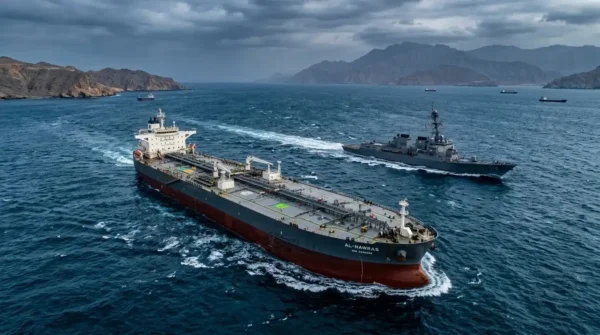
Simultaneously with the opening of the Bürgenstock summit, the maritime theater has emerged as a primary tool of geopolitical coercion. On June 20, Iran’s joint military command, the Khatam al-Anbiya Central Headquarters, alongside the Islamic Revolutionary Guard Corps (IRGC) Navy, issued an official decree declaring that the Strait of Hormuz is closed to all international commercial shipping vessels.
Tehran’s Strategic Casus Belli
The IRGC Navy, utilizing state-aligned outlets like the Fars News Agency, warned global energy cartels and shipping conglomerates that any vessels approaching the strategic chokepoint would face severe security risks. Tehran justified this blockade as a direct, asymmetric retaliation against what it terms a clear breach of commitments by the United States and Western allies to compel a total Israeli military withdrawal from southern Lebanon. By threatening to choke a corridor responsible for the daily transit of over 17 million barrels of crude oil, Iran aims to maximize its economic leverage at the Swiss negotiating table.
The Western Counter-Narrative and Market Realities
The United States government has moved swiftly to neutralize Iran’s informational blockade. Speaking via Axios, United States Central Command (CENTCOM) spokesperson Captain Tim Hawkins strongly rejected Tehran’s claims, stating unequivocally that Iran does not exert physical control over the Strait of Hormuz. CENTCOM verified that international commercial maritime traffic continues to flow smoothly, confirming that more than 55 merchant ships safely transited the waterway under heavy Western naval convoy and aerial surveillance within the last 24 hours.
Compounding the tension, Vice President J.D. Vance stated in a Fox News interview before departing Andrews Air Force Base that he remains confident the ceasefire framework will hold, noting that Western intelligence has seen no physical evidence of an operational maritime shutdown.
Meanwhile, President Donald Trump escalated the rhetorical stakes via a detailed statement on Truth Social. Trump announced that while no maritime fees or tolls are permitted during the active 60-day interim window, the United States will unilaterally impose strict shipping tolls on the Strait of Hormuz if a final, binding treaty is not completed within the designated timeframe. Trump framed these potential fees as a necessary reimbursement for American naval forces acting as the “Guardian Angel” for Middle Eastern shipping lanes.
Nancy Guthrie Update: $6M Crypto Scheme Exposed in Sonoran Search
The Lebanon Ceasefire Collapse and Asymmetrical Proxy Shifts
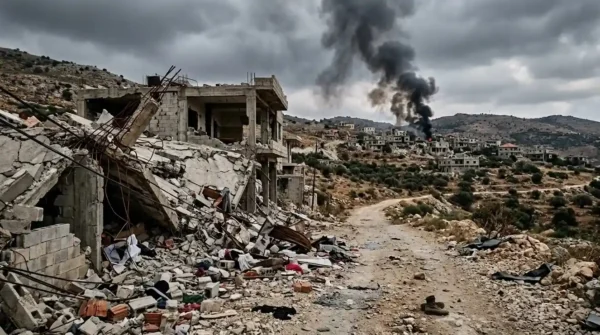
The ultimate fate of the Bürgenstock summit remains tied to the hyper-volatile developments in the Levant. Although a localized truce between Israel and Hezbollah was reportedly brokered on June 19, field reports indicate a systemic breakdown of the armistice on the ground.
Direct Kinetic Escalation and Casualties
The Lebanon National News Agency and the Lebanese Health Ministry reported that Israeli military strikes on southern and eastern Lebanon have intensified significantly over the past 24 hours, raising the cumulative conflict death toll in Lebanon past the 4,000 threshold.
Hezbollah command centers have accused the Israel Defense Forces (IDF) of exploiting the ceasefire to execute tactical ground sweeps toward the strategic Ali Taher hills, which directly command the key city of Nabatiyeh. Kinetic drone and artillery strikes targeting villages such as Qannarit, Arab Salim, Barish, and Kfar Rumman resulted in at least 28 confirmed civilian casualties today, including children and a Lebanese army soldier. In response, Israeli Prime Minister Benjamin Netanyahu confirmed that the IDF will maintain its deployment within its designated southern security zone as long as necessary to defend its northern borders, asserting its right to strike forcefully against any localized Hezbollah movements.
The IRGC’s New Asymmetrical Doctrine in Iraq
According to highly classified Western and regional intelligence assessments, the IRGC has quietly initiated a major structural shift within its Axis of Resistance networks to bypass diplomatic accountability. Recognizing that high-profile Iraqi Shiite militias are subject to intense political pressure from the Iraqi federal government and Washington, the IRGC has established decentralized, direct-reporting asymmetrical militia cells within Iraq.
These highly insulated cells are specifically engineered to conduct low-signature drone and rocket operations against Gulf Cooperation Council (GCC) states hosting United States military bases. This operational pivot allows Tehran to maintain latent kinetic pressure on Western regional infrastructure while maintaining plausible deniability during the high-stakes negotiations in Switzerland.
Global Economic Impact: Energy Markets on a Knife-Edge
The confluence of conflicting reports regarding the status of the Strait of Hormuz and the highly fragile nature of the Swiss peace talks has triggered substantial volatility across international financial markets:

- Energy Futures Fluctuation: Brent Crude and West Texas Intermediate (WTI) futures experienced sharp, intraday spikes as commodity traders balanced CENTCOM’s transit data against the IRGC’s explicit kinetic warnings.
- Supply Chain Pressures: International maritime war-risk insurance premiums for vessels navigating the Gulf of Oman and the Persian Gulf have spiked by an estimated 14%, forcing nations like Australia to extend temporary domestic fuel excise relief to insulate consumers from soaring energy import costs.
The Hindu
Core Analytical Assessment: The Path Forward
The Bürgenstock summit is an intense geopolitical game of chicken. Iran is attempting to hold global maritime trade hostage via its rhetoric surrounding the Strait of Hormuz while conditioning its long-term nuclear compliance on a total cessation of hostilities in Lebanon. Conversely, the United States is deploying severe economic containment strategies, backed by the threat of post-ceasefire shipping tolls and secondary financial sanctions.
With both the American and Iranian delegations facing immense domestic political blowback, the technical and diplomatic maneuvers over the next 48 hours in Switzerland will decide whether West Asia transitions toward structured de-escalation or relapses into an uncontained regional war.
Frequently Asked Questions (FAQs)
Q1: What is the primary objective of the Bürgenstock Summit according to the latest Iran war updates?
Ans: The primary objective of the Bürgenstock Summit in Switzerland is to operationalize and advance the 14-point interim Islamabad Memorandum of Understanding (MoU) signed on June 17, 2026. High-level delegations from the United States, Iran, Pakistan, and Qatar are working within a critical 60-day window to transition the fragile cessation of hostilities into a permanent regional peace treaty.
Q2: Is the Strait of Hormuz actually closed to international shipping?
Ans: There are conflicting field reports. Iran’s Khatam al-Anbiya Central Headquarters and the IRGC Navy officially decreed the total closure of the Strait of Hormuz as retaliation for alleged Western ceasefire violations in Lebanon. However, United States Central Command (CENTCOM) strongly rejected this claim, verifying that over 55 major merchant vessels safely transited the chokepoint within 24 hours under Western naval escort.
Q3: What specific warning did President Donald Trump issue regarding the Strait of Hormuz?
Ans: President Donald Trump issued an explicit statement warning that while no maritime fees will be collected during the 60-day interim armistice, the United States will unilaterally impose strict shipping tolls on the Strait of Hormuz if a final, binding peace treaty is not executed within the designated timeframe. He framed this as a reimbursement fee for US naval forces protecting global shipping lanes.
Q4: What are the main “ceasefire spoilers” reported along the Israel-Lebanon border?
Ans: The main spoilers involve localized violations of the recently brokered truce. Hezbollah has accused Israeli ground forces of conducting tactical infiltration sweeps toward the strategic Ali Taher hills overlooking Nabatiyeh. Concurrently, kinetic drone and artillery strikes in southern Lebanon have resulted in fresh civilian casualties, severely threatening the progress of the Swiss diplomatic track.
Q5: What is the IRGC’s new asymmetrical doctrine in Iraq?
Ans: To maintain regional leverage while evading direct diplomatic accountability during the peace talks, the Islamic Revolutionary Guard Corps (IRGC) has shifted its strategy. Instead of utilizing high-profile, established Iraqi Shiite militias, which face intense political pressure from Baghdad and Washington, the IRGC has formed decentralized, highly insulated, direct-reporting asymmetrical militia cells to launch low-signature drone and rocket operations against Western assets.
Q6: How are these geopolitical tensions impacting the global economy today?
Ans: The ongoing brinkmanship has put global financial markets on edge. Brent Crude and WTI energy futures are experiencing sharp intraday volatility due to the conflicting reports over the Strait of Hormuz. Additionally, maritime war-risk insurance premiums for vessels navigating the Persian Gulf and Gulf of Oman have spiked by approximately 14%, directly increasing international supply chain costs.